The history of Western calligraphy is inseparable from the history of the Church. For over a thousand years, monasteries were the centers of literacy, learning, and the art of beautiful writing. Monks and scribes devoted their lives to copying sacred texts by hand, developing lettering styles that combined clarity with reverence. The scripts they created, from the rounded forms of Uncial to the dramatic angles of Blackletter, shaped the entire tradition of Latin calligraphy that we practice today. Whether you are looking for church letter styles for bulletins, invitations, or personal devotional projects, understanding this rich heritage will deepen both your lettering skills and your appreciation of sacred art.
How the Church Preserved and Shaped Calligraphy
After the fall of the Roman Empire, monasteries became the primary guardians of written knowledge in Europe. While secular society lost much of its literacy, monastic communities maintained scriptoria, dedicated rooms where monks spent their days copying manuscripts by hand. Every Bible, prayer book, and theological text was produced letter by letter, stroke by stroke, by trained scribes working with quills, ink, and vellum.
This monastic tradition did far more than preserve existing texts. It drove innovation in letterform design. Each monastery developed its own scribal traditions, and as monks traveled between religious houses, they carried techniques and styles with them. Over centuries, this cross-pollination produced a remarkable evolution of scripts, each building on the strengths of its predecessors while adapting to the needs of the community.
The reverence that monks brought to their work elevated calligraphy from a practical skill to a spiritual discipline. Many scribes viewed their work as an act of prayer. The patience, focus, and devotion required to produce a perfect page of text mirrored the qualities they cultivated in their spiritual lives. This connection between beautiful writing and spiritual practice is one reason why church lettering styles carry such a distinctive sense of gravitas and beauty.
Key Sacred Calligraphy Styles
Uncial Script: The Early Christian Hand
Uncial script dominated Christian manuscript production from the 4th to the 8th century. Its rounded, majuscule letterforms were a departure from the angular Roman capitals that preceded them, offering a softer, more flowing aesthetic that was well suited to writing on vellum with a quill pen. The great early Latin Bibles, including the Codex Sinaiticus and the Codex Amiatinus, were written in Uncial.
Uncial letters are characterized by their generous curves, consistent height, and minimal use of ascenders and descenders. The script has a calm, stately quality that makes it ideal for headings, titles, and ceremonial text in church settings. Modern calligraphers often use Uncial for wedding invitations, church programs, and decorative Bible verse displays because of its timeless elegance and readability.
Insular Script: The Celtic Masterworks
Insular script emerged in the monasteries of Ireland and Britain during the 6th and 7th centuries. It is the hand behind the most celebrated religious manuscripts ever created, including the Book of Kells, the Lindisfarne Gospels, and the Book of Durrow. Insular script combined rounded letterforms with elaborate decoration, introducing the intricate knotwork, spirals, and animal interlace that define Celtic art.
What makes Insular manuscripts so remarkable is the integration of text and image. The scribes did not simply write the words and then add decoration. They treated each page as a unified composition where the letters themselves became decorative elements. Initial letters expanded into full-page illuminations, with tendrils of ink spiraling outward to fill every available space. This tradition of the decorated initial, where the first letter of a chapter or verse is enlarged and ornamented, remains a staple of church lettering to this day.
Blackletter: The Gothic Cathedral of Calligraphy
Blackletter, also known as Gothic script, emerged in the 12th century and dominated European writing for nearly four hundred years. Its dense, angular letterforms were designed to save space on expensive vellum, but the resulting aesthetic was so powerful that Blackletter became synonymous with authority, tradition, and sacred text. The Gutenberg Bible, the first major book printed with movable type, used Blackletter typefaces, cementing the association between this style and religious publishing.
Blackletter scripts come in several varieties. Textura, with its precise, closely packed verticals, is the most formal and the style most commonly associated with church lettering. Rotunda, an Italian variant, softens the sharp angles with rounder forms. Fraktur, developed in Germany, adds flowing curves to the Blackletter structure and was used extensively for religious and official documents throughout Central Europe.
For modern church use, Blackletter remains a popular choice for headings, certificates, and special occasion lettering. Its visual weight and historical associations give it an immediate sense of importance and solemnity that few other scripts can match.
Illuminated Manuscripts: When Lettering Became Sacred Art
Illuminated manuscripts represent the highest achievement of religious calligraphy. These were not simply books with illustrations. They were sacred objects in which every element, from the gold leaf to the pigments ground from precious minerals, was chosen to honor the divine text. The process of creating an illuminated manuscript could take years, with multiple scribes, painters, and gilders working together to produce a single volume.
The techniques developed for illuminated manuscripts, including gilding, decorated borders, miniature painting, and ornamental initials, established an artistic vocabulary that still influences church design today. When you see a church bulletin with an ornate initial letter, a decorative border around a Bible verse, or gold accents on a certificate, you are seeing the direct legacy of medieval illumination.
Church Lettering in the Modern Era
While few churches today commission hand-written manuscripts, the tradition of beautiful lettering remains alive in many forms. Church bulletins, wedding programs, memorial cards, and congregational certificates all benefit from thoughtful typography that echoes the dignity of the sacred tradition. Many church administrators and volunteers look for lettering styles that convey reverence without feeling archaic.
Hand lettering is experiencing a revival in religious communities. Bible journaling, the practice of adding hand-lettered annotations and decorations to the margins of a Bible, has become enormously popular. Devotional lettering projects, where practitioners write out favorite verses in beautiful calligraphy, combine creative expression with spiritual reflection. These activities draw directly on the monastic tradition of finding prayer in the act of beautiful writing.
Building Your Sacred Lettering Skills
If you are drawn to church letters and religious lettering, the best way to develop your skills is through structured practice. Learning to control your pen, maintain consistent letterforms, and develop a sense of rhythm and spacing are foundational skills that apply to every calligraphic style, from Uncial to modern hand lettering.
Loopinky's workbooks provide exactly this kind of structured, guided practice. While our themes draw from contemporary aesthetics, the skills you build, stroke control, letter consistency, decorative elements, and creative layouts, are the same skills that monastic scribes spent years perfecting.
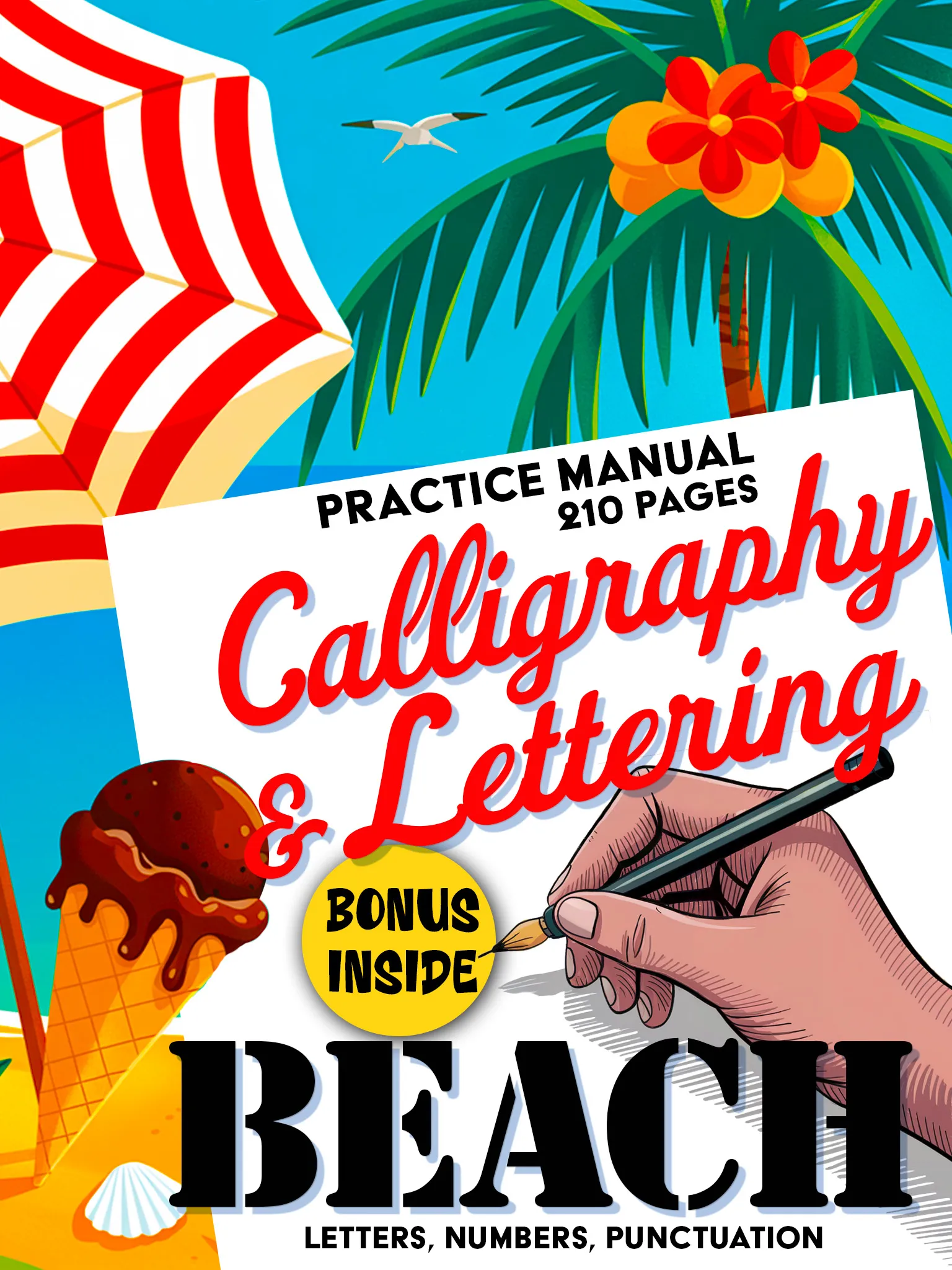
Calligraphy & Lettering: Beach Premium
Premium 210-page calligraphy manual. Fluid scripts, decorative elements and creative layouts.
Buy on Amazon - $14.99For those who enjoy exploring multiple lettering styles, the Comics Vol.1 workbook offers a completely different aesthetic. Its bold, dynamic letterforms build hand strength and confidence that transfer directly to more traditional calligraphic scripts.
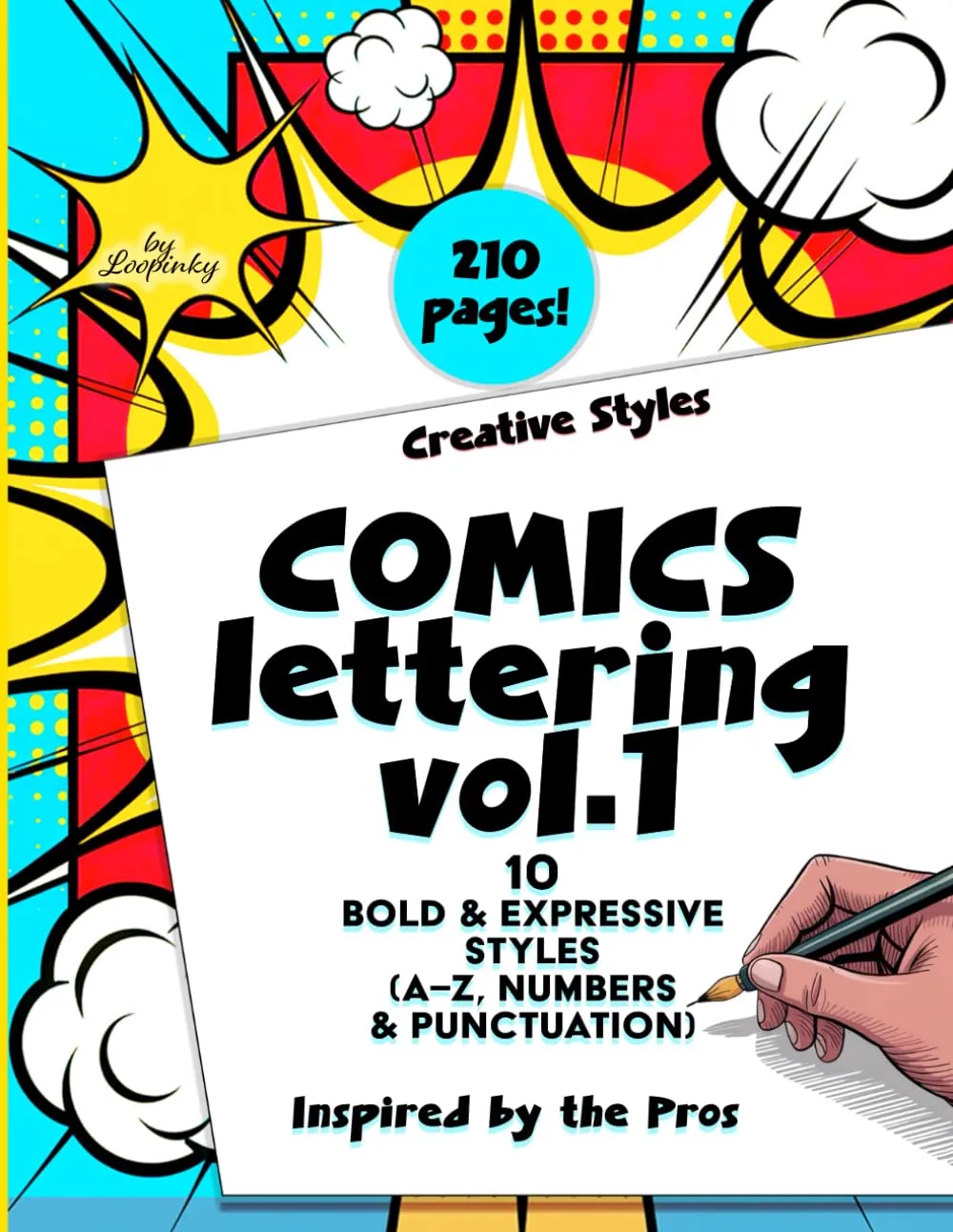
Comics Lettering Vol. 1
210-page premium manual. Bold comics lettering styles, full alphabets and creative exercises.
Buy on Amazon - $14.99The tradition of church letters reminds us that calligraphy has always been more than decoration. At its best, it is an act of devotion, a way of honoring words by giving them the most beautiful form possible. Whether you are lettering a Bible verse for your wall, designing a church bulletin, or simply practicing your strokes in a quiet evening, you are participating in a tradition that stretches back over a thousand years.