You have been there. You search "calligraphy workbook" on Amazon, excited to find something that will challenge you, and the first fifty results are all the same: "Learn the basics!" "Perfect for beginners!" "Start your calligraphy journey!" You already know the basics. You have already started. You have filled out more tracing guides and basic stroke exercises than you can count. What you actually need is a workbook that respects the skills you have already built and pushes you somewhere new.
If you are searching for a calligraphy workbook that is not for beginners, you are not alone. This is one of the most common frustrations in the calligraphy community, and it is a frustration that deserves a real answer.
The Beginner Workbook Problem
The calligraphy workbook market has a structural problem. The vast majority of books available target absolute beginners because that is the largest audience. Publishers know that most people buying their first calligraphy workbook have never held a brush pen, so they fill the pages with explanations of what downstrokes and upstrokes are, how to hold your pen and why you should practice basic shapes before moving to letters.
This is completely valid for first-time learners. The problem is that once you have completed one or two beginner workbooks, you have graduated from that content. But when you go looking for the next step, you keep finding more beginner books. It is like passing your driving test and then being offered another driving test preparation course.
Why most workbooks stay at beginner level
Several popular brands focus almost exclusively on the beginner market:
- June & Lucy: their workbooks are beautifully designed and excellent for someone who has never tried brush lettering. However, they primarily teach one style of modern calligraphy with basic tracing exercises. If you have already completed one June & Lucy book, another will feel very similar.
- Paper Peony Press: another well-respected beginner brand with clean layouts and structured lessons. Their books do a great job introducing the fundamentals, but they do not push significantly beyond basic letterforms and simple word practice.
- Ricca's Garden: known for approachable, friendly beginner content. Like the others, their focus is on getting newcomers comfortable with basic strokes and a single lettering style.
To be clear, there is nothing wrong with these brands. They serve their audience well. The problem is not that beginner workbooks exist; it is that there are so few options for people who have moved past that stage. If you are reading this article, you are likely one of those people.
What Does "Not for Beginners" Actually Mean?
When experienced calligraphers search for a workbook that is not for beginners, they are typically looking for several things:
- No basics repetition: they do not need another explanation of how to make a basic downstroke. They want to jump straight into practice.
- Multiple styles: after mastering one calligraphy style, the most motivating next step is learning additional styles. A workbook that teaches five or ten different lettering approaches provides far more value than one that teaches a single style more deeply.
- Creative diversity: they want to explore different aesthetics, from elegant to bold, from classic to modern, from organic to geometric.
- Substantial content: a 60-page workbook can be finished in a weekend. Intermediate and advanced practitioners want something that will last weeks or months of regular practice.
- Challenge without condescension: they want exercises that assume competence rather than treating them like they have never picked up a pen.
Loopinky: Built for People Who Already Know the Basics
This is exactly why Loopinky workbooks exist. They were not designed as introduction-to-calligraphy books. They were designed for people who already have basic lettering skills and want to expand their range, challenge their creativity and practice styles they have never seen before.
Comics Lettering Vol.1: 10 Styles in One Book
This is the workbook that most directly answers the "not for beginners" search. Instead of one style taught slowly with extensive hand-holding, Comics Lettering Vol.1 gives you 10 completely different lettering styles across 210 pages. Each style has its own character, its own rules and its own complete alphabet with numbers and punctuation.
You will not find a single page explaining what a downstroke is. The book assumes you can already hold a pen and form letters. It jumps straight into showing you new styles and giving you guided practice to master them. That is what makes it fundamentally different from beginner workbooks.
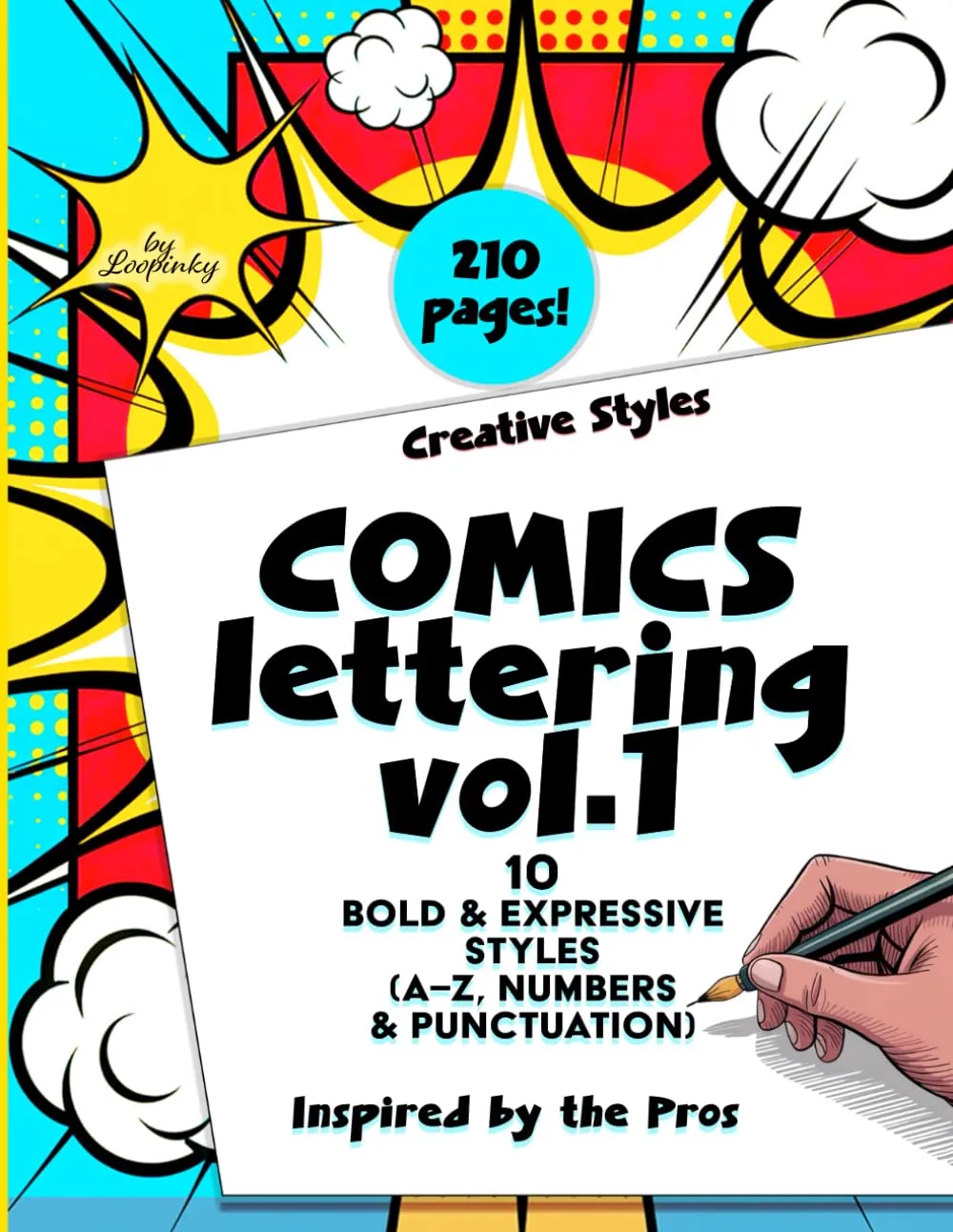
Comics Lettering Vol.1
10 bold styles, complete A-Z alphabets, numbers & punctuation. 210 pages of guided exercises.
Buy on Amazon - $14.99Beach Premium: 210 Pages of Refined Practice
If your calligraphy background is more traditional and you want to deepen your cursive skills rather than explore comics styles, Beach Premium offers 210 pages of premium calligraphy practice. The fluid, seaside-inspired scripts go well beyond what you find in beginner workbooks. There are decorative elements, creative layouts and advanced letterforms that challenge even experienced calligraphers.
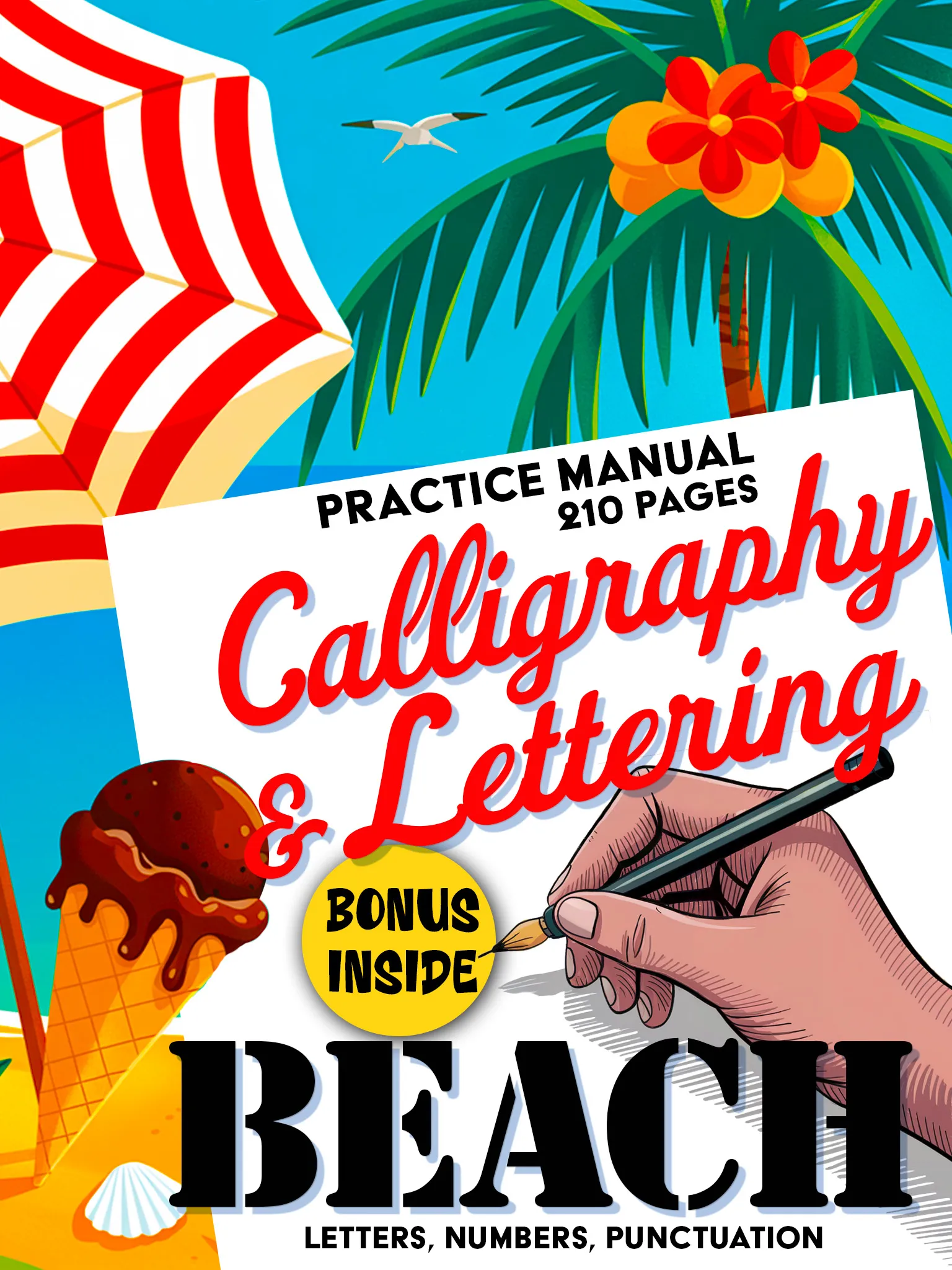
Calligraphy & Lettering: Beach Premium
Premium 210-page calligraphy manual. Fluid scripts, decorative elements and creative layouts.
Buy on Amazon - $14.99Western Cowboy: Themed Variety
The Western Cowboy workbook takes a different approach to the "not for beginners" problem. Instead of generic practice, it immerses you in a specific theme with five distinct Western-inspired lettering styles. Each style has a completely different character, from rugged and angular to flowing and decorative. The themed approach makes practice feel like a creative project rather than repetitive drills.
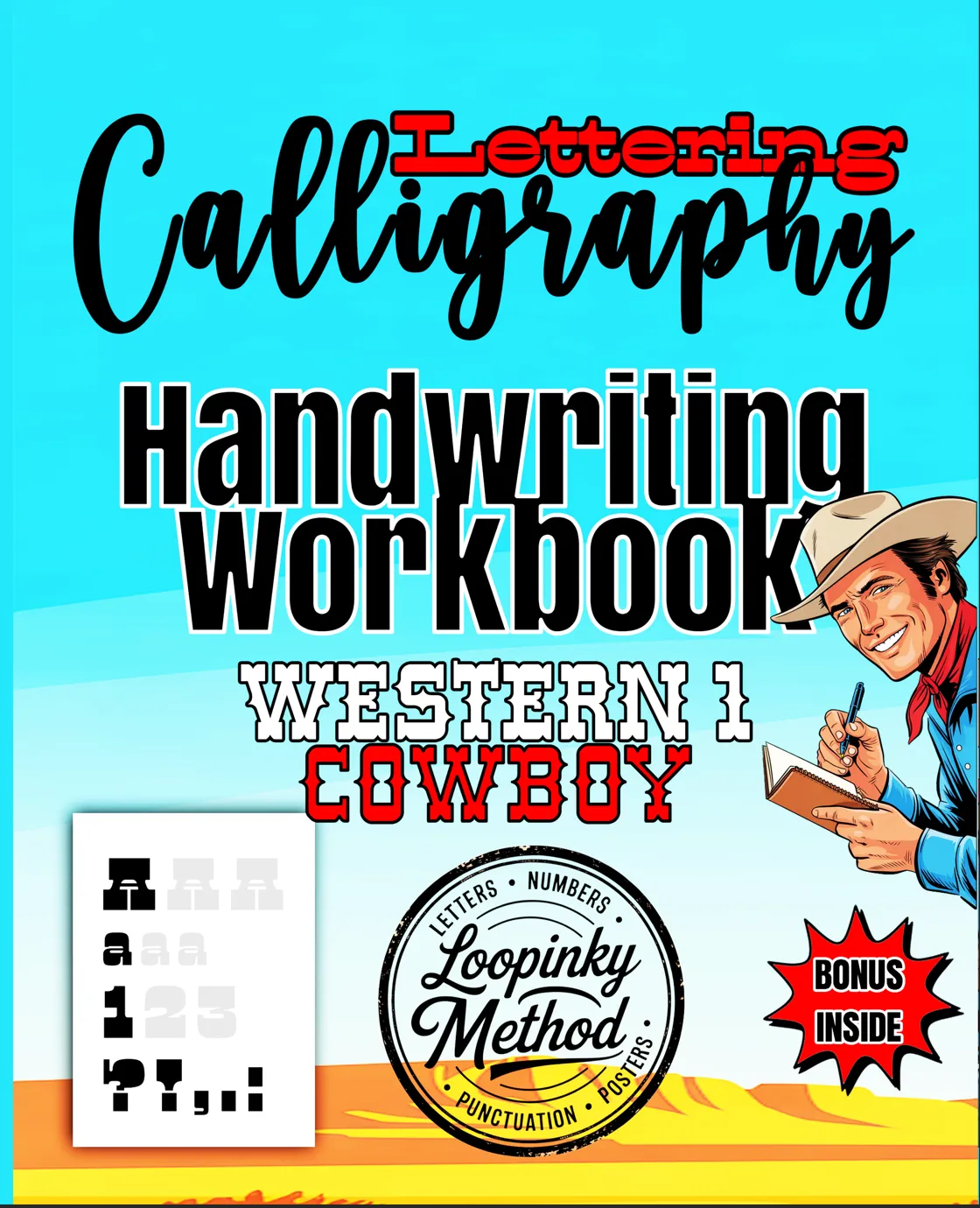
Cursive: Western Cowboy
5 unique Western lettering styles, full alphabets, numbers & punctuation. 108 pages.
Buy on Amazon - $9.99Drift: Dynamic, Movement-Inspired Lettering
Drift offers yet another angle for non-beginners. Its dynamic, movement-inspired lettering styles push you to think about letters in motion, with energy and flow that static practice books rarely explore. It is compact and focused, making it ideal for experienced letterers who want a concentrated challenge.
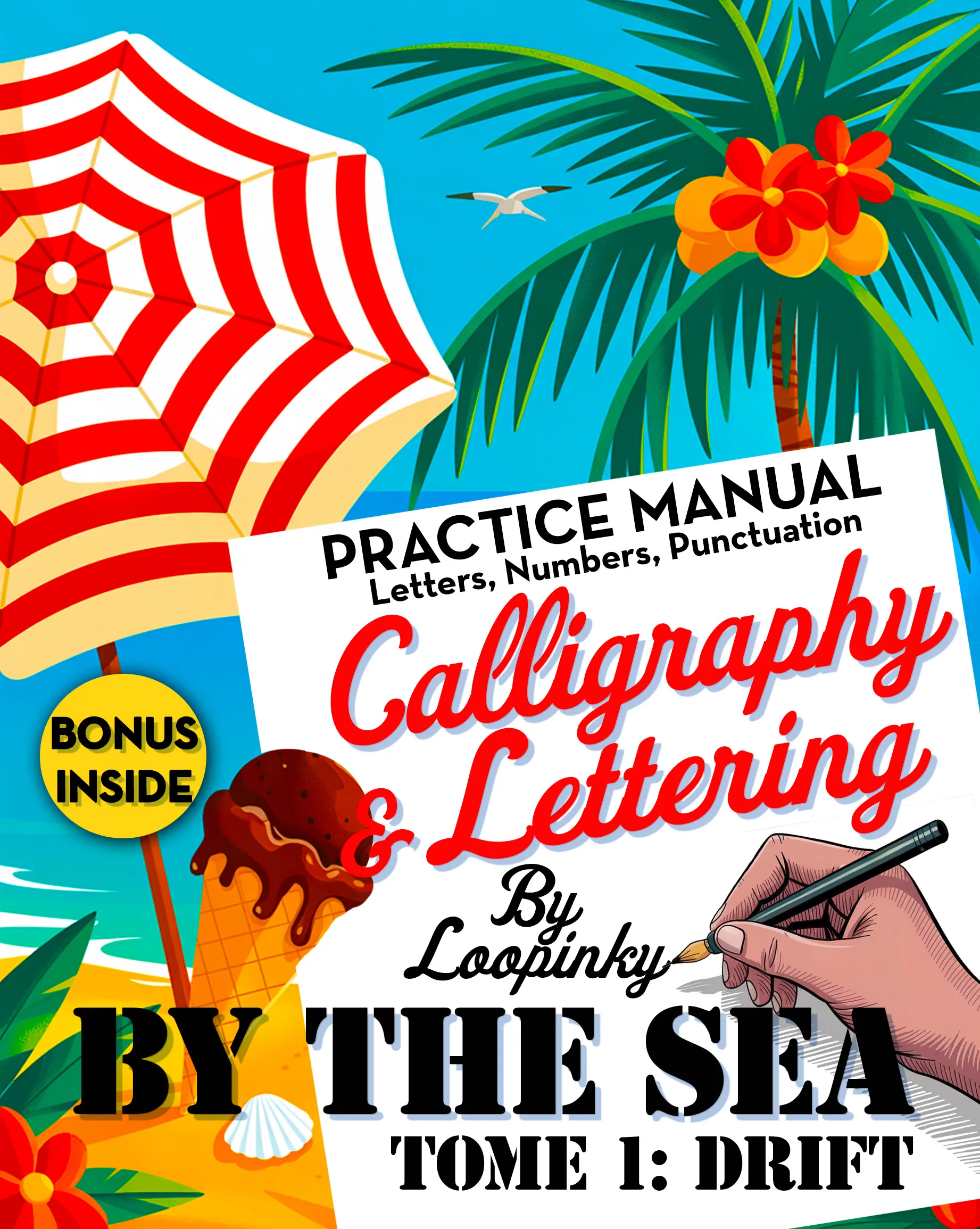
Drift Lettering
Dynamic, movement-inspired lettering practice. Compact and affordable.
Buy on Amazon - $9.99The Variety Advantage
Here is something that experienced calligraphers understand intuitively but that beginner workbooks ignore entirely: the fastest way to improve at lettering is to practice multiple styles, not to trace the same alphabet over and over in a single style.
When you learn a second lettering style, it teaches you things about your first style that you could not see before. When you learn a third, you start understanding the underlying principles that all letterforms share. By the time you have practiced five or ten different styles, you have developed a typographic intuition that no amount of single-style repetition can match.
This is why Loopinky workbooks pack so many styles into each volume. Comics Lettering Vol.1 alone gives you more stylistic variety than five typical beginner workbooks combined. That variety is not a gimmick; it is a fundamentally better way to develop your skills once you are past the basics.
Signs You Have Outgrown Beginner Workbooks
Not sure if you are ready for a non-beginner workbook? Here are some signs:
- You can form all 26 letters in at least one calligraphy style without looking at a guide
- You understand the difference between thick and thin strokes and can control them consistently
- You have completed at least one full workbook from cover to cover
- You feel bored or unchallenged by tracing exercises
- You find yourself wanting to try styles you have seen online but cannot find in any workbook
- You buy a new workbook and discover it teaches the same things as the last one
If you recognize yourself in three or more of these points, you are absolutely ready for a workbook that skips the basics and gets straight to creative, diverse lettering practice.
Building Your Non-Beginner Practice Routine
Once you have a workbook that matches your level, here is how to get the most from it:
- Practice a different style each week: with 10 styles in Comics Lettering Vol.1, you have over two months of focused, varied practice
- Compare styles actively: after learning two or three styles, go back and practice them side by side. Notice what they share and where they differ.
- Apply styles to real projects: write someone's name, letter a quote or design a card using each new style you learn
- Combine styles: try using one style for a headline and another for body text. This builds the kind of typographic judgment that professionals use daily.
The gap between beginner and intermediate calligraphy is not about skill. It is about access to the right practice material. If every workbook you find teaches the same basics, you will plateau no matter how talented you are. The right workbook breaks that plateau.
Where to Buy
All Loopinky workbooks are available on Amazon worldwide. Since calligraphy exercises are primarily visual, they work regardless of your language. Ready to move beyond beginner? Browse the full Loopinky collection and find a workbook that actually challenges you.