You did it. You worked through your first calligraphy workbook — maybe it was June & Lucy's Ultimate Guide to Modern Calligraphy & Hand Lettering for Beginners, or Paper Peony Press's classic Lettering and Modern Calligraphy: A Beginner's Guide, or Ricca's Garden's The Lettering Workbook for Absolute Beginners. You can write the full alphabet in a flowing modern script. Your thick downstrokes and thin upstrokes are consistent. Your friends are impressed.
And now you're wondering: what comes next?
The Beginner Plateau
Here's something nobody tells you when you start calligraphy: most workbooks on the market teach the exact same thing. Modern calligraphy basics — a single elegant script style, the same drills, the same letter connections. They're all excellent at what they do, and brands like Paper Peony Press, June & Lucy and Ricca's Garden have helped millions of people discover the joy of beautiful lettering.
But once you've mastered that one style, buying another beginner workbook feels like repeating a class you've already passed. You need a new challenge — something that builds on your skills while opening up completely different creative directions.
Three Directions Beyond Beginner
After learning modern calligraphy basics, there are three exciting paths you can explore:
1. Comics & Bold Hand Lettering
This is the opposite end of the lettering spectrum. Where modern calligraphy is elegant and flowing, comics lettering is bold, graphic and full of personality. Think superhero titles, sound effects, expressive display fonts. It requires completely different skills: geometric construction, consistent weight, dramatic contrast. If you've only practiced delicate brush scripts, comics lettering will stretch your abilities in ways you never expected.
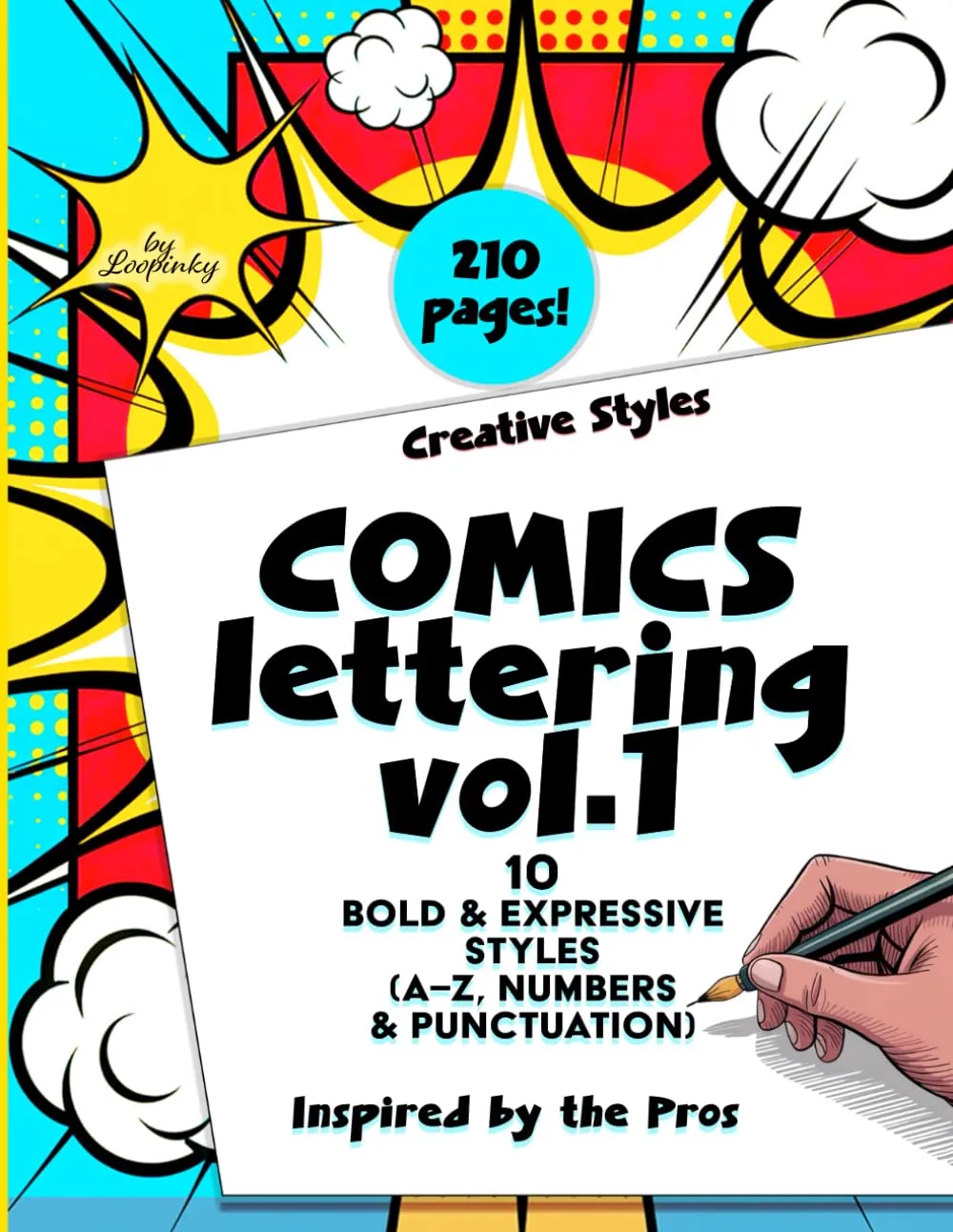
Comics Lettering Vol.1
10 bold styles, complete A-Z alphabets, numbers & punctuation. 210 pages of guided exercises.
Buy on Amazon - $14.992. Themed Cursive Styles
You know one cursive style. But there are dozens of beautiful variations — each with its own personality and character. Western-inspired scripts evoke the rugged elegance of the frontier. Ocean-inspired calligraphy flows like waves on a page. Gothic scripts carry centuries of history. Learning multiple cursive styles deepens your understanding of letterforms and makes you a more versatile artist.
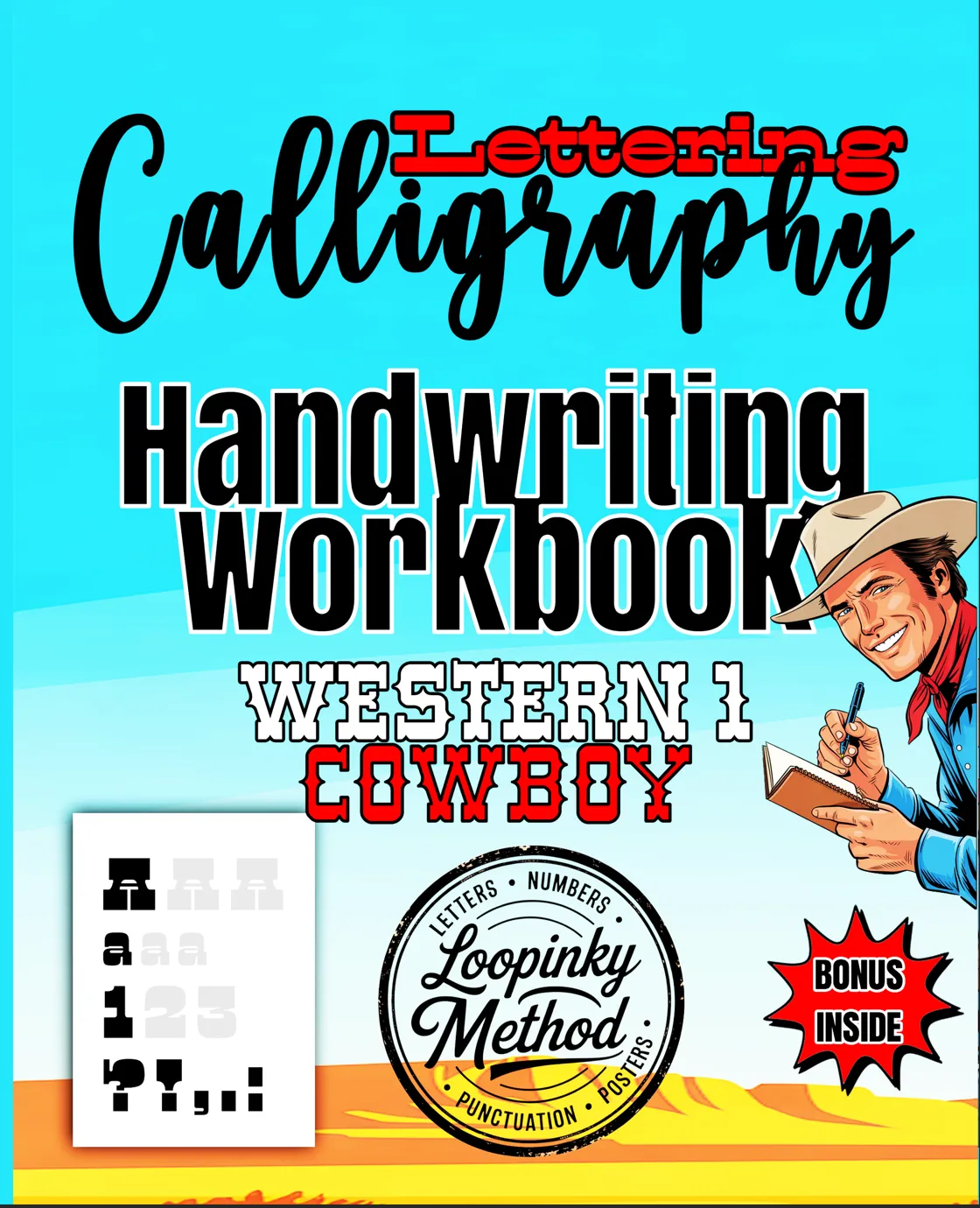
Cursive: Western Cowboy
5 unique Western lettering styles, full alphabets, numbers & punctuation. 108 pages.
Buy on Amazon - $9.993. Advanced Calligraphy & Decorative Elements
Once you can write beautiful letters, the next frontier is composition: combining lettering with flourishes, decorative borders, ornamental elements and creative layouts. This is where calligraphy becomes true art. Premium workbooks guide you through these advanced techniques with structured exercises.
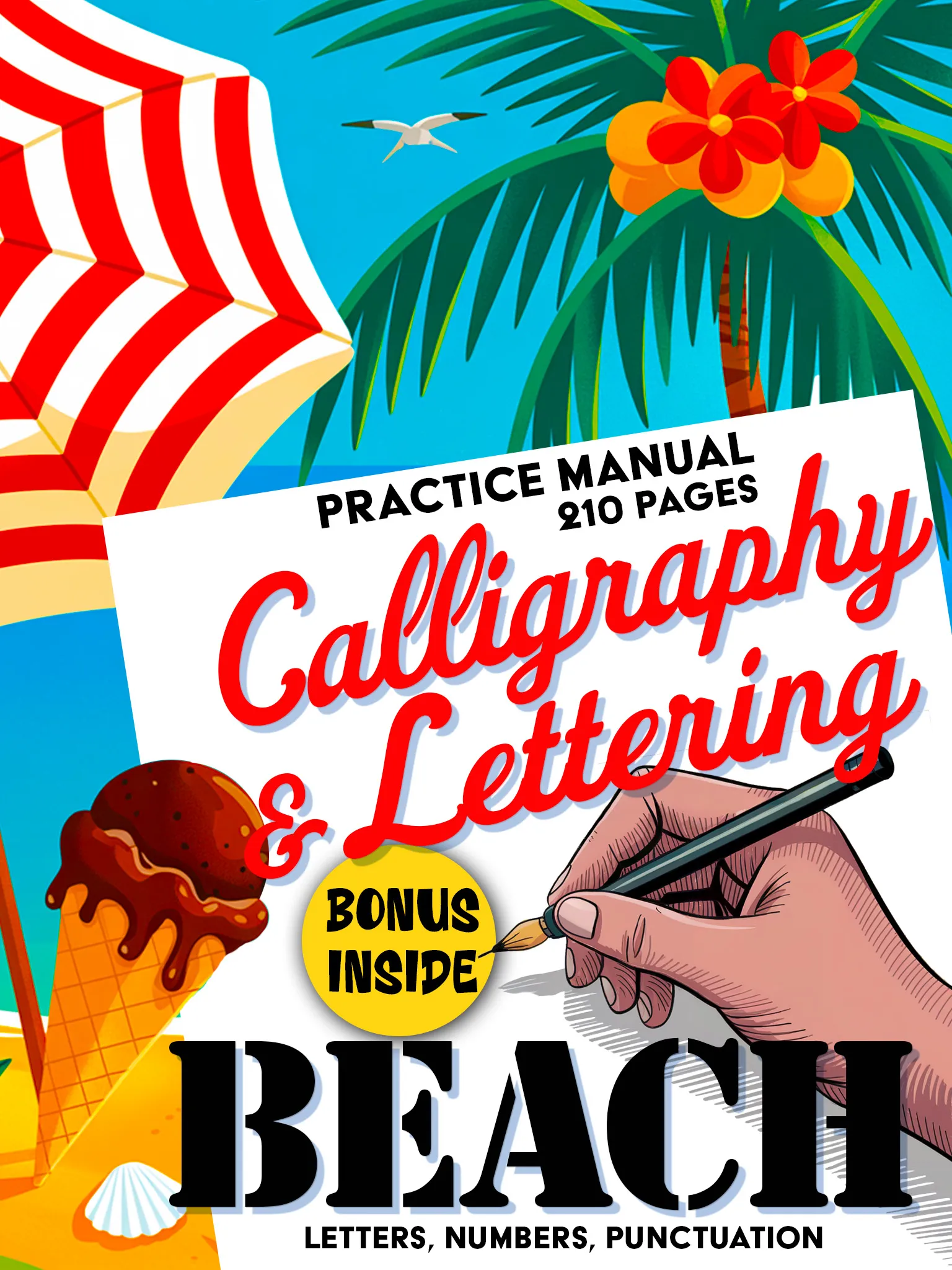
Calligraphy & Lettering: Beach Premium
Premium 210-page calligraphy manual. Fluid scripts, decorative elements and creative layouts.
Buy on Amazon - $14.99Why Most Workbooks Stop at Beginner
The calligraphy workbook market is dominated by beginner-level content for a simple reason: that's where most customers are. Brands like Paper Peony Press, Ricca's Garden and June & Lucy have built their reputations on beautifully designed, accessible introductions to modern calligraphy. And they're right to do so — everyone starts as a beginner.
But this creates a gap. Once you've graduated from the beginner stage, the options narrow dramatically. You can buy another beginner book (redundant), take an expensive online course (time-consuming), or hunt for advanced resources on your own (frustrating).
That's exactly the gap Loopinky was designed to fill. Instead of teaching the same modern calligraphy basics one more time, Loopinky workbooks assume you already know how to hold a pen and form basic strokes. They jump straight into creative, diverse styles that challenge you in new ways.
A Practical Next-Step Plan
Here's a simple roadmap for continued progress after your first workbook:
- Assess your strengths: Are your basic strokes consistent? Can you write the full alphabet without looking at a guide? If yes, you're ready to move on.
- Pick a contrasting style: If you learned modern calligraphy, try comics lettering. If you focused on brush pen scripts, try a structured Western style. Contrast accelerates learning.
- Practice with variety: Work through a multi-style workbook rather than a single-style one. Loopinky's Comics Lettering Vol.1 offers 10 different styles in one book — that's 10 new challenges.
- Combine your skills: Once you know multiple styles, start mixing them in creative projects. A birthday card with elegant calligraphy and bold comics lettering? That's uniquely yours.
The Complementary Approach
Think of your calligraphy journey as building a toolkit. Your beginner workbook from Paper Peony Press or June & Lucy gave you your first essential tool — modern calligraphy. Loopinky adds completely different tools to your kit: comics lettering, Western scripts, ocean-inspired calligraphy, decorative composition.
They're not competing approaches. They're complementary ones. The best calligraphers are those who can switch between styles effortlessly, adapting their lettering to any project or mood.
The best time to start practicing a new style is right after you've mastered your first one. Your hand is trained, your eye is sharp, and your confidence is high. Don't let that momentum fade — channel it into something new.