If you've mastered basic strokes, learned your first alphabet, and filled an entire beginner workbook cover to cover, you know the feeling: what comes next? You search Amazon for "intermediate calligraphy workbook" and find page after page of the same beginner-level content you've already outgrown. It's one of the most frustrating gaps in the calligraphy market, and it's the reason so many promising lettering artists plateau after their first few months of practice.
The truth is, the calligraphy workbook market is overwhelmingly dominated by beginner titles. And while those books serve an important purpose, they leave intermediate artists stranded. You don't need another lesson on how to hold a brush pen or trace basic connecting strokes. You need creative challenges, diverse styles, and workbooks that push your skills into new territory.
The Beginner Workbook Problem
Let's be clear: beginner calligraphy workbooks are excellent at what they do. Publishers like June & Lucy, Paper Peony Press, and Ricca's Garden have built well-deserved reputations for helping absolute newcomers fall in love with lettering. Their books are beautifully designed, their instructions are clear, and their tracing exercises build confidence quickly.
Ricca's Garden "The Lettering Workbook for Absolute Beginners" is one of the most popular titles on Amazon, and for good reason. It walks you through every foundational skill with patience and clarity. June & Lucy workbooks pair elegant aesthetics with structured drills. Paper Peony Press offers clean layouts that make repetition feel satisfying rather than tedious.
But here's the thing: once you've completed one or two of these books, you've learned what they have to teach. The alphabets are familiar. The drills feel routine. You can form consistent letters, connect strokes smoothly, and write short words without looking at a model. You're not a beginner anymore.
What Intermediate Calligraphers Actually Need
The jump from beginner to intermediate isn't about perfecting the same alphabet. It's about expanding your creative vocabulary. An intermediate calligrapher needs exposure to multiple lettering styles, each with its own personality and technical demands. You need to develop the ability to switch between styles, to understand why certain letterforms work in certain contexts, and to build a personal aesthetic.
Specifically, intermediate artists benefit from:
- Multiple style exposure: practicing five or ten different lettering styles instead of one
- Thematic coherence: working within a visual theme that ties letterforms to a mood or aesthetic
- Creative layouts: moving beyond single-letter practice to words, phrases, and decorative compositions
- Higher page counts: enough practice space to truly internalize each style, not just sample it
- Unique approaches: styles you won't find in generic workbooks, giving you a distinctive edge
This is exactly the gap that Loopinky workbooks are designed to fill.
Loopinky: Built for the Intermediate Artist
Loopinky workbooks don't start with "how to hold your pen." They assume you already know the fundamentals and jump straight into creative, theme-driven lettering styles that challenge your skills and expand your range. Each book offers multiple distinct styles within a single cohesive theme, giving you the variety and depth that beginner workbooks simply can't provide.
Beach Premium: Fluid Scripts and Coastal Elegance
The Beach Premium workbook is a 210-page premium manual that takes calligraphy in a direction most workbooks never explore. Its seaside-inspired scripts feature flowing, wave-like letterforms that demand smooth, confident hand movements. You'll work through multiple alphabets, decorative elements, and full creative layouts, all tied together by a cohesive coastal aesthetic.
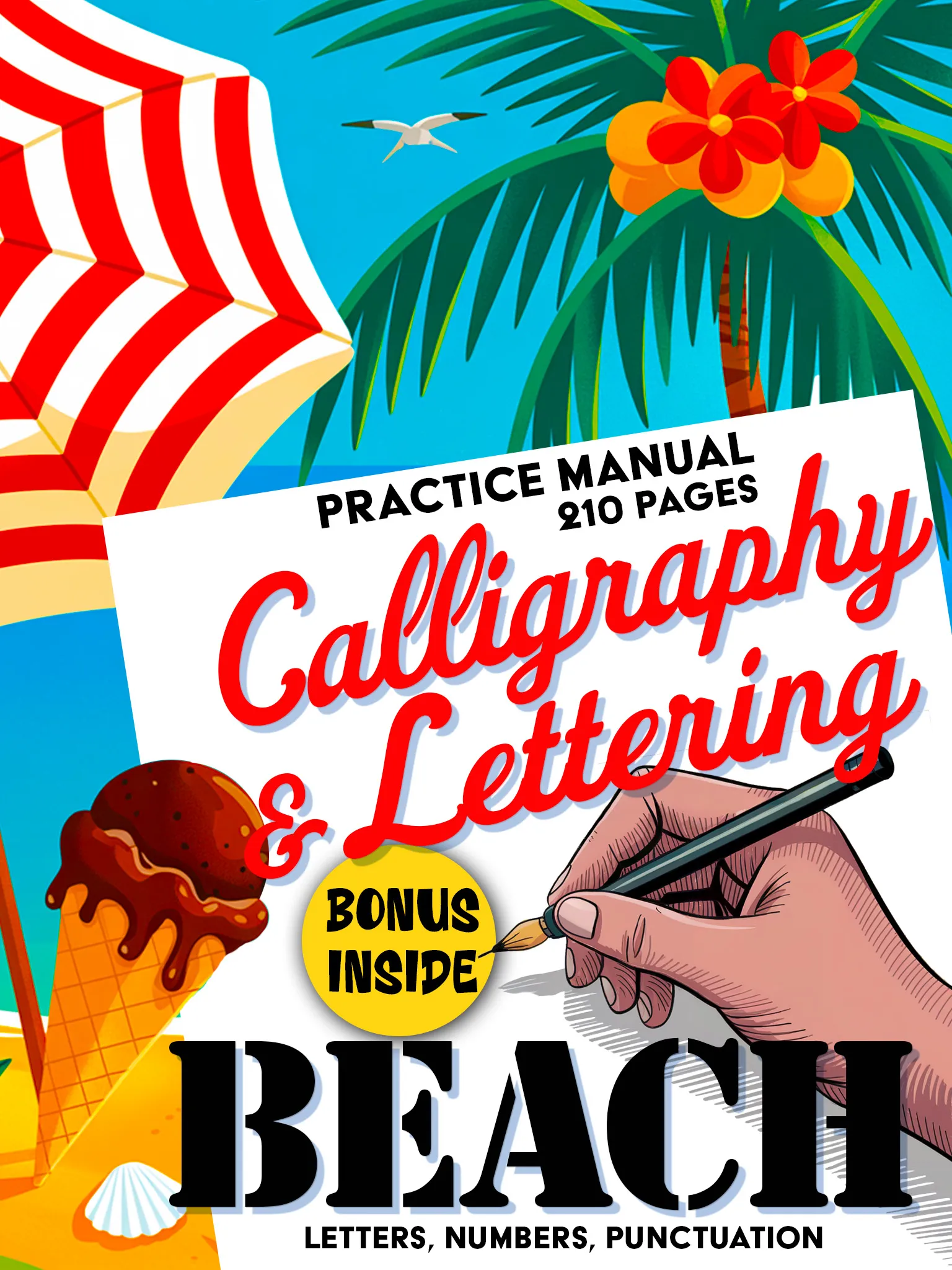
Calligraphy & Lettering: Beach Premium
Premium 210-page calligraphy manual. Fluid scripts, decorative elements and creative layouts.
Buy on Amazon - $14.99For intermediate calligraphers, Beach Premium is particularly valuable because it trains you to adapt your stroke rhythm to different aesthetic contexts. The fluid, organic letterforms require a different kind of control than the structured alphabets you practiced as a beginner. This is the kind of skill-building that separates a confident intermediate artist from someone who simply writes neatly.
Comics Vol.1: Ten Styles, Unlimited Personality
If Beach Premium is about elegance and flow, the Comics Vol.1 workbook is about bold expression and variety. This 210-page manual contains ten completely different lettering styles inspired by comic book typography. From dramatic block letters to playful hand-drawn scripts, each style has its own rules, its own rhythm, and its own visual impact.
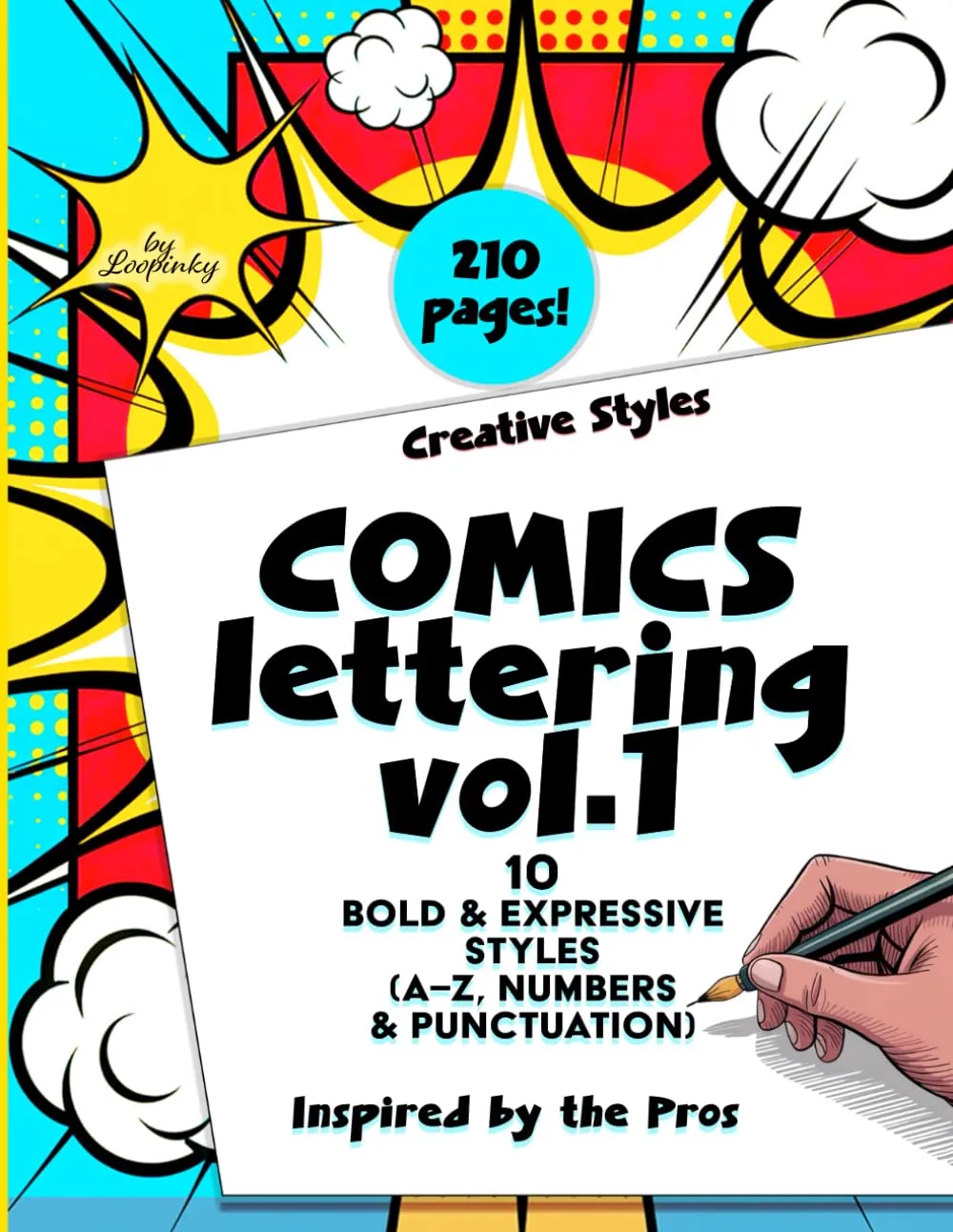
Calligraphy & Lettering: Comics Vol.1
210-page manual with 10 unique comic-inspired lettering styles. Full alphabets, numbers & punctuation.
Buy on Amazon - $14.99Ten styles in a single workbook means ten opportunities to learn something new. For intermediate artists, this is gold. You're not just practicing one alphabet until it's perfect. You're training your brain and your hand to recognize and reproduce a wide range of letterforms. This versatility is what transforms a hobbyist into a skilled lettering artist.
Western Cowboy: Rustic Precision Meets Creative Challenge
The Western Cowboy workbook brings frontier-inspired typography to the practice page. With five unique Western lettering styles across 108 pages, this book demands the kind of precise, deliberate strokes that sharpen intermediate skills. Western lettering is inherently decorative, with serifs, slab elements, and ornamental details that push your pen control to the next level.
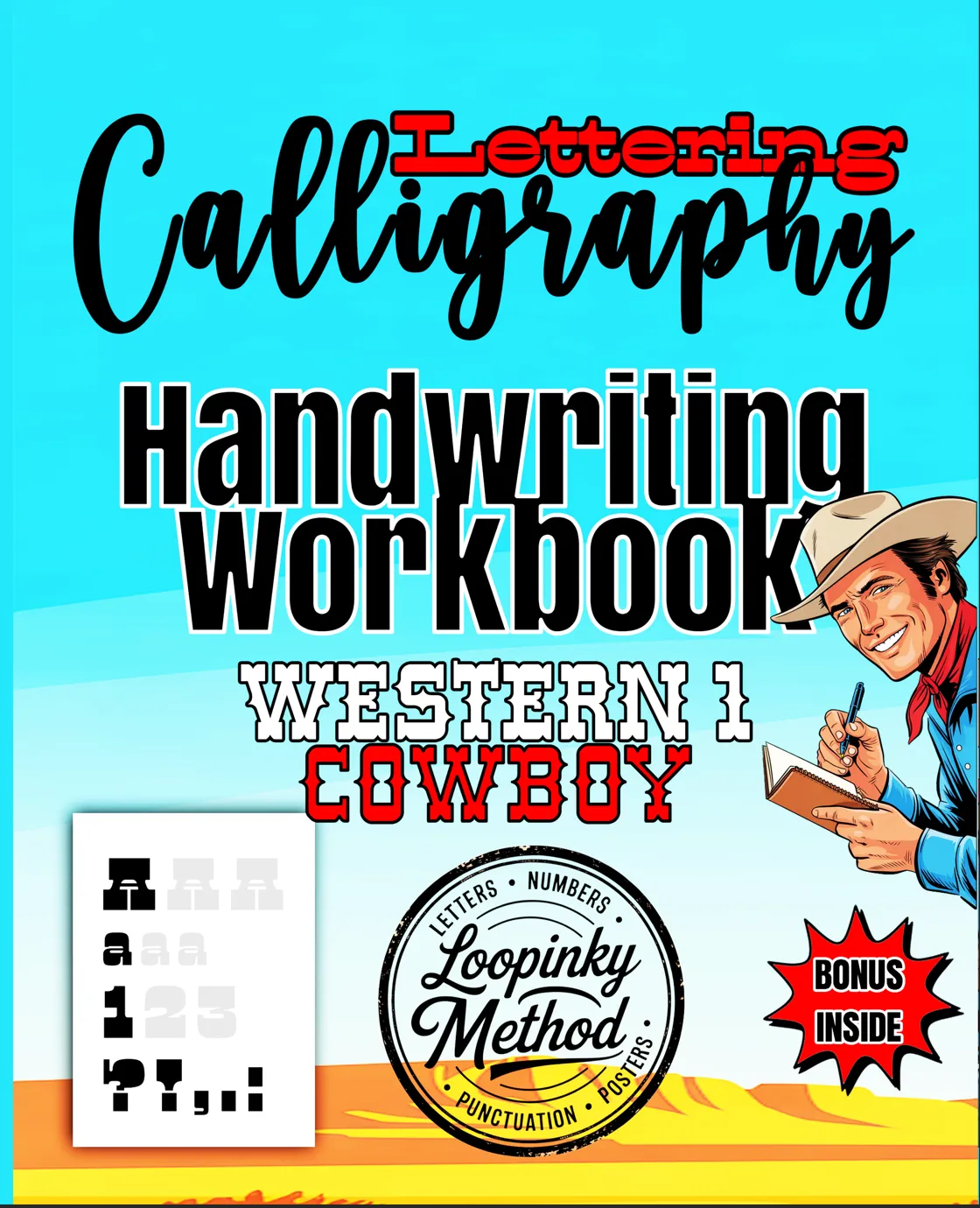
Calligraphy & Lettering: Western Cowboy
5 unique Western lettering styles across 108 pages. Full alphabets, numbers & punctuation.
Buy on Amazon - $9.99Western lettering styles are rarely found in mainstream calligraphy workbooks, making this an excellent way to develop skills that set you apart. The combination of bold structure and decorative flair is a perfect training ground for intermediate calligraphers who want to move beyond modern script into more characterful territory.
Why Style Variety Matters at the Intermediate Level
There's a reason musicians don't just learn one song and call it mastery. Exposure to different styles builds fundamental skills that transfer across all your lettering work. When you practice a flowing ocean script and then switch to angular Western block letters, you're training your hand to adapt to different rhythms, pressures, and spatial relationships. Each new style you learn makes every other style easier.
This cross-training effect is something beginner workbooks can't offer because they're focused on building one foundational skill set. But at the intermediate level, variety isn't a distraction. It's the engine of growth.
How to Choose Your Next Workbook
If you've completed a beginner workbook and feel ready for more, consider what kind of growth you're looking for:
- For elegance and flow: Beach Premium offers fluid, organic scripts that train smooth hand movement
- For maximum variety: Comics Vol.1 delivers ten distinct styles in one book, perfect for building versatility
- For precision and character: Western Cowboy develops decorative lettering skills with frontier-inspired typography
All three approaches are equally valid, and many intermediate calligraphers work through multiple themed workbooks to develop a well-rounded skill set.
The best calligraphy workbook for intermediate artists isn't a harder version of a beginner book. It's one that opens doors to styles and techniques you didn't know existed.
Ready to move beyond the basics? Explore the full Loopinky collection and find the workbook that matches your next creative challenge.