Bubble letters are one of the most popular and recognizable lettering styles in the world. These rounded, inflated characters look like they could float off the page, and they are loved by artists, students, teachers, and designers alike. Whether you want to decorate a school project, create eye-catching posters, or simply have fun with creative lettering, learning to draw bubble letters is a rewarding and surprisingly simple skill to develop.
In this guide, we will walk you through everything you need to know about bubble letters: what they are, why they are so appealing, and exactly how to draw them step by step. By the end, you will have the confidence and technique to create stunning bubble lettering on your own.
What Are Bubble Letters?
Bubble letters are a hand lettering style where each character is drawn with rounded, puffy outlines that give the appearance of an inflated balloon or bubble. Unlike standard block letters, bubble letters have no sharp corners. Every edge is curved, every angle is softened, and the result is a playful, three-dimensional look that jumps off the page.
This style emerged from graffiti and street art culture in the 1970s and 1980s, where artists used rounded letterforms to create bold, visible tags on walls and subway cars. Today, bubble letters have crossed into mainstream art, education, and design. You will find them on birthday cards, classroom decorations, YouTube thumbnails, social media posts, and brand logos.
What You Need to Get Started
One of the best things about bubble letters is that you do not need expensive supplies. Here is a basic toolkit:
- Pencil: for sketching the initial letter shapes lightly. A standard HB pencil works perfectly.
- Eraser: for cleaning up guidelines and adjusting curves as you refine each letter.
- Fine-tip pen (0.3-0.5mm): for inking the final outlines. Micron pens or any felt-tip pen with a consistent line will do.
- Thick markers or colored pencils: for filling in the letters with color and adding shading effects.
- Paper: smooth paper works best. A practice workbook with guidelines is ideal for beginners.
Step-by-Step: How to Draw Bubble Letters
Step 1: Write the Letter Lightly in Pencil
Start by writing a simple block letter in pencil. Keep it light so you can erase later. Write the letter larger than you normally would, leaving space around it. This basic shape will serve as the skeleton for your bubble letter. For example, write a capital "A" in the center of your page.
Step 2: Round Every Corner
Now, go around the letter and replace every straight edge with a gentle curve and every sharp corner with a smooth arc. Imagine the letter was made of rubber and someone inflated it like a balloon. The vertical strokes become slightly bowed outward, the horizontal strokes curve gently, and every point where two lines meet becomes a smooth, rounded junction. This is the key step that transforms a regular letter into a bubble letter.
Step 3: Thicken the Letter
Draw a second outline around your rounded letter, adding uniform thickness. The gap between the inner and outer outline should be consistent, typically about 3-5mm depending on the size of your letter. This thickness is what gives bubble letters their characteristic puffy, inflated appearance. Keep the outer outline smooth and even.
Step 4: Add a 3D Shadow
To make your bubble letter pop off the page, add a shadow. The easiest technique is to draw a second copy of the outer outline, shifted slightly down and to the right (about 2-3mm). Connect the original outline to the shadow outline with short diagonal lines. This creates an instant 3D effect that makes the letter look like it has depth and weight.
Step 5: Ink and Color
Once you are happy with the pencil sketch, trace the final outlines with your fine-tip pen. Wait for the ink to dry completely, then erase all pencil marks. Now fill in the letter with color. For a classic bubble look, add a small white highlight circle in the upper-left area of the letter, as if light is reflecting off a glossy surface. Fill the shadow area with a darker shade or solid black.
Step 6: Practice the Full Alphabet
Repeat this process for every letter. Some letters are easier than others. Letters with lots of curves (like B, C, D, O, S) are natural fits for the bubble style. Letters with straight lines and sharp angles (like A, K, M, W) require more creative rounding. Practice the entire A-Z alphabet to build consistency and confidence.
Tips for Better Bubble Letters
- Keep spacing uniform: the gap between the inner and outer outline should stay consistent across all letters. This is what makes bubble letters look professional.
- Exaggerate the curves: beginners often make their curves too subtle. Push the roundness further than you think you need to. The more inflated the letters look, the more effective the bubble style becomes.
- Use guidelines: draw horizontal lines to keep your letters at a consistent height. This is especially important when writing full words in bubble letters.
- Add highlights consistently: place the white highlight in the same position on every letter (usually upper-left) to create a cohesive, polished look.
- Overlap for impact: when writing words, try slightly overlapping adjacent letters. This creates a dynamic, graffiti-inspired composition.
- Experiment with color: bubble letters look fantastic in bright, saturated colors. Try gradients, rainbow effects, or complementary color schemes.
Bubble Letters and Creative Lettering
Bubble letters are just one branch of the vast creative lettering tree. Once you have mastered the bubble style, you will find that the underlying skills transfer beautifully to other lettering forms. The ability to visualize letters as three-dimensional shapes, to control curves and outlines, and to add shadows and highlights are all foundational skills in comics lettering, graffiti art, sign painting, and hand lettering.
Comics lettering, in particular, shares many techniques with bubble letters. Both styles involve drawing letters rather than writing them, building up shapes with careful outlines, and adding dimensional effects. If you enjoy the playful, bold aesthetic of bubble letters, you will likely love exploring the broader world of comics-style hand lettering.
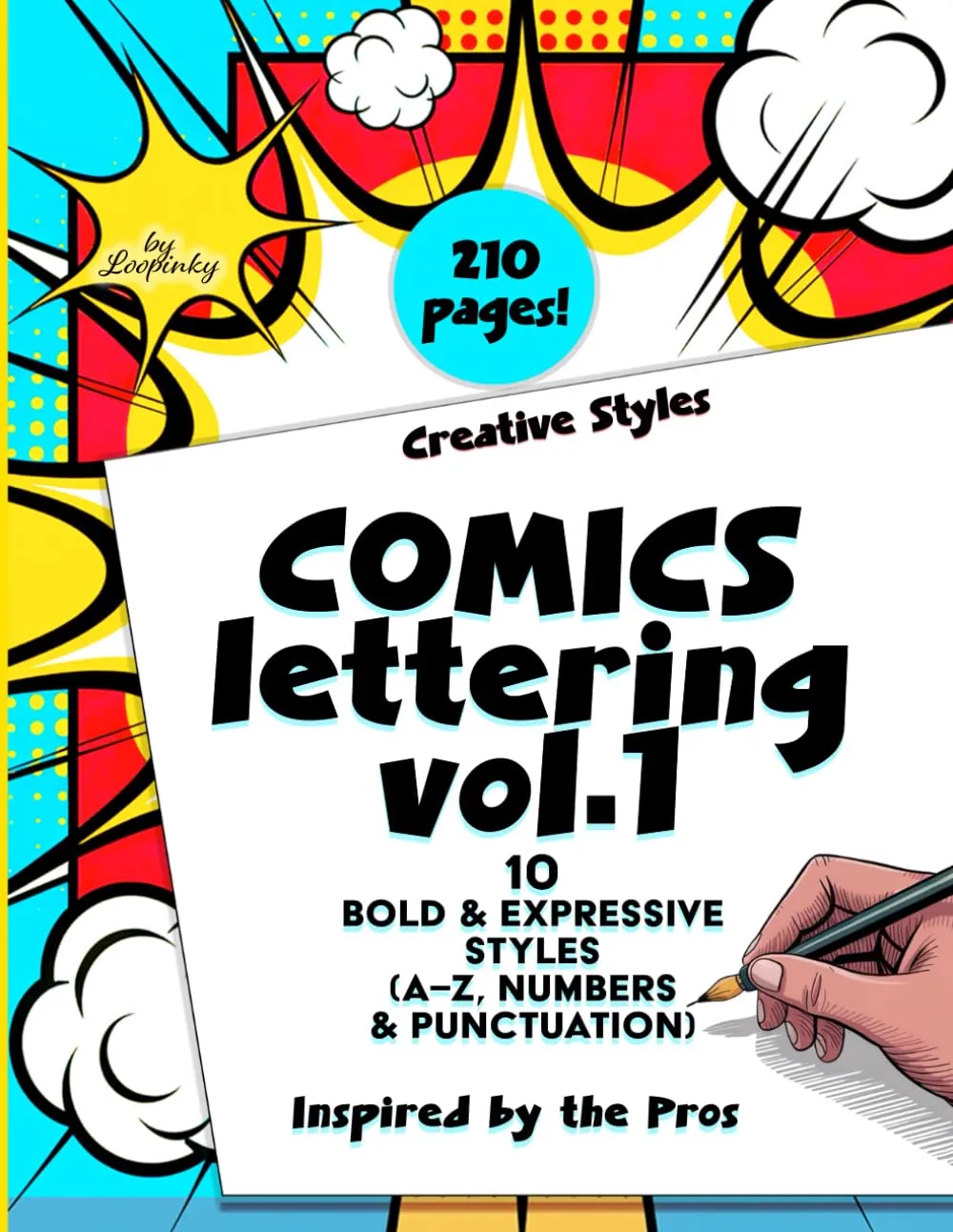
Comics Lettering Vol.1
10 bold comics lettering styles including bubble-inspired rounded alphabets. Complete A-Z alphabets, numbers and punctuation. 210 pages of guided practice.
Buy on Amazon - $14.99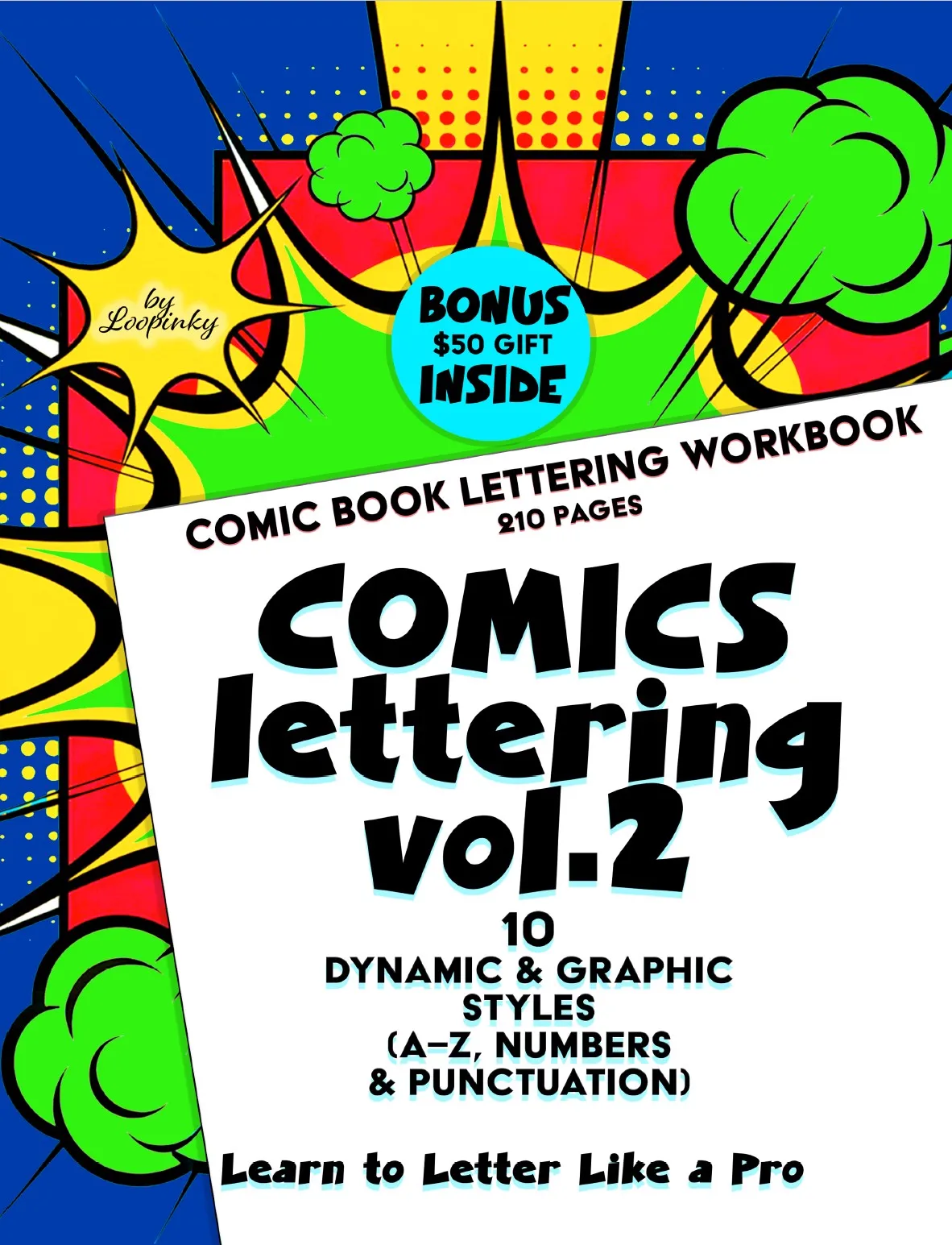
Comics Lettering Vol.2
10 additional dynamic styles with bonus content worth $50. More bold, rounded and expressive alphabets to expand your lettering skills. 210 pages.
Buy on Amazon - $14.99Where to Use Bubble Letters
Once you can draw bubble letters confidently, the applications are endless:
- School projects and posters: bubble letters make titles and headings stand out instantly
- Birthday cards and invitations: add a personal, hand-crafted touch to any celebration
- Journal and planner decoration: use bubble letters for monthly headers and section titles
- Social media content: hand-drawn bubble text stands out in Instagram stories and Pinterest pins
- Room decor: create name signs, motivational quotes, or wall art
- T-shirt and merchandise design: bubble lettering translates perfectly to print-on-demand products
Bubble letters prove that lettering does not have to be serious to be beautiful. Sometimes the most joyful art comes from embracing playfulness and letting every letter bounce off the page.
Ready to take your bubble lettering skills further? Explore the Loopinky lettering workbook collection and discover structured practice exercises that will transform your hand lettering from beginner to bold.