Comics lettering is the art of creating hand-drawn typography for comic books, graphic novels, posters and creative projects. Unlike traditional calligraphy, comics lettering is bold, expressive and unapologetically loud. It's the typography that screams "BAM!", "POW!" and "CRASH!" from the pages of your favorite comics.
But comics lettering isn't just for comics. These styles are increasingly popular in graphic design, social media content, merchandise, packaging, and anywhere that demands attention-grabbing typography.
What Makes Comics Lettering Unique?
Comics lettering differs from traditional calligraphy in several key ways:
- Drawing, not writing: each letter is carefully constructed rather than written in a single fluid stroke. This means you build up each letter shape with multiple pen strokes.
- Bold outlines: most comics lettering features thick outlines that make letters readable from a distance. The outline is often the most important element.
- Expressive personality: every comics lettering style has a distinct mood. Horror fonts feel creepy, superhero fonts feel powerful, bubble letters feel playful. The style communicates before you even read the word.
- 3D effects: shadows, depth, highlights, and dimensional effects are common. These techniques make letters pop off the page.
- Imperfection is a feature: unlike calligraphy where consistency is key, comics lettering often embraces irregular sizes, tilted angles, and energetic imperfections that add character.
Popular Comics Lettering Styles
Classic Hero Style
Think Superman, Spider-Man, classic Marvel and DC. Strong, angular uppercase letters with thick strokes and clean edges. This is the foundational comics lettering style. Characteristics: bold, uppercase, slightly condensed, with uniform stroke width. Often used in dialogue balloons and title cards.
Bubble / Rounded Style
Soft, inflated letters that look like balloons or pillows. Popular in kids' comics, friendly branding, and casual designs. The key technique is rounding every corner and edge, making the letters feel approachable and fun.
Horror / Gothic Style
Irregular, dripping, angular letters that evoke unease. Sharp points, jagged edges, and organic shapes that feel alive. This style is used in horror comics, Halloween designs, and anything that needs a dark, unsettling mood.
Graffiti / Street Style
Inspired by street art and hip-hop culture. Dynamic, overlapping letters with wild curves, arrows, and decorative elements. This style is energetic and rebellious, perfect for urban-themed projects.
Retro / Vintage Style
Inspired by 1950s-70s comics and advertising. Rounded, friendly letters with a nostalgic feel. Often features halftone dots, starbursts, and period-appropriate decorative elements.
Sound Effects (Onomatopoeia)
The most iconic element of comics lettering: visual sound effects. "BAM!", "CRASH!", "BOOM!" — these aren't just words, they're visual experiences. Each sound effect is unique, with the lettering style matching the sound it represents. An explosion looks different from a whisper.
How to Practice Comics Lettering
Tools You'll Need
- Pencil: for sketching letter outlines before inking
- Fine-tip pen (0.3-0.5mm): for outlines and details (Micron pens work great)
- Thick marker: for filling in letters and creating bold strokes
- Eraser: for cleaning up pencil guidelines after inking
- Practice workbook: for structured exercises with guided practice lines
The Step-by-Step Process
- Sketch guidelines: draw horizontal lines to keep your letters at a consistent height. Most comics lettering uses uppercase letters only.
- Pencil the skeleton: lightly sketch the basic letter shapes. Focus on spacing and proportion. Don't worry about thickness yet.
- Build up the outline: go over your pencil sketch with thicker strokes, defining the final shape of each letter. This is where the style comes in.
- Ink the outline: use your fine-tip pen to trace the final letter shapes. Keep your hand steady and confident.
- Fill and shade: fill in the letters with your thick marker. Add shadows, highlights, or 3D effects as needed.
- Erase and clean: remove any visible pencil lines once the ink is fully dry.
Start with a Workbook
The fastest way to learn comics lettering is through structured practice. A workbook gives you pre-drawn guidelines, example alphabets, and progressive exercises that build your skills step by step.
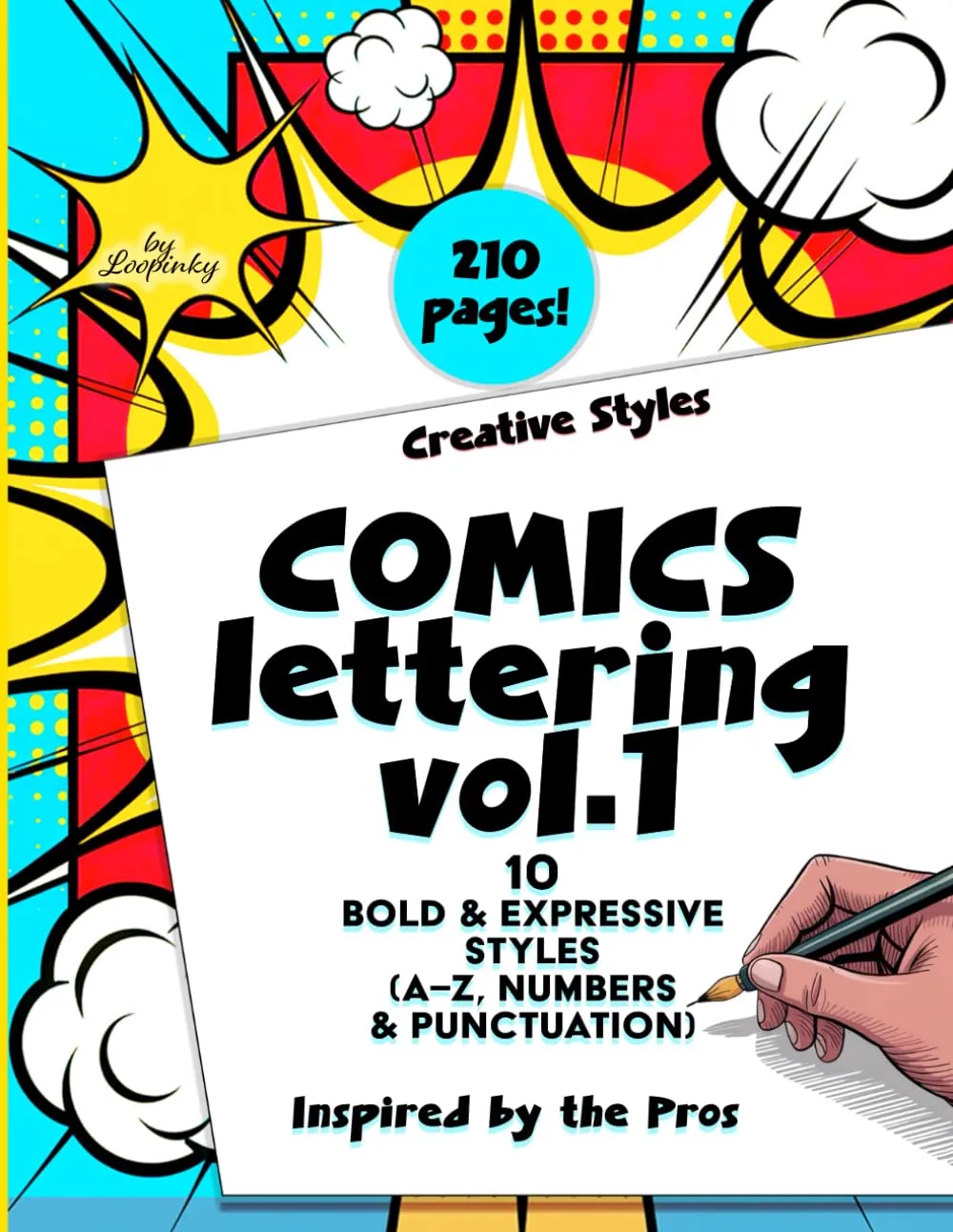
Comics Lettering Vol.1
10 bold comics lettering styles including HEROINKY, BAM!, BLOB and YOOP. Complete A-Z alphabets, numbers and punctuation. 210 pages.
Buy on Amazon - $14.99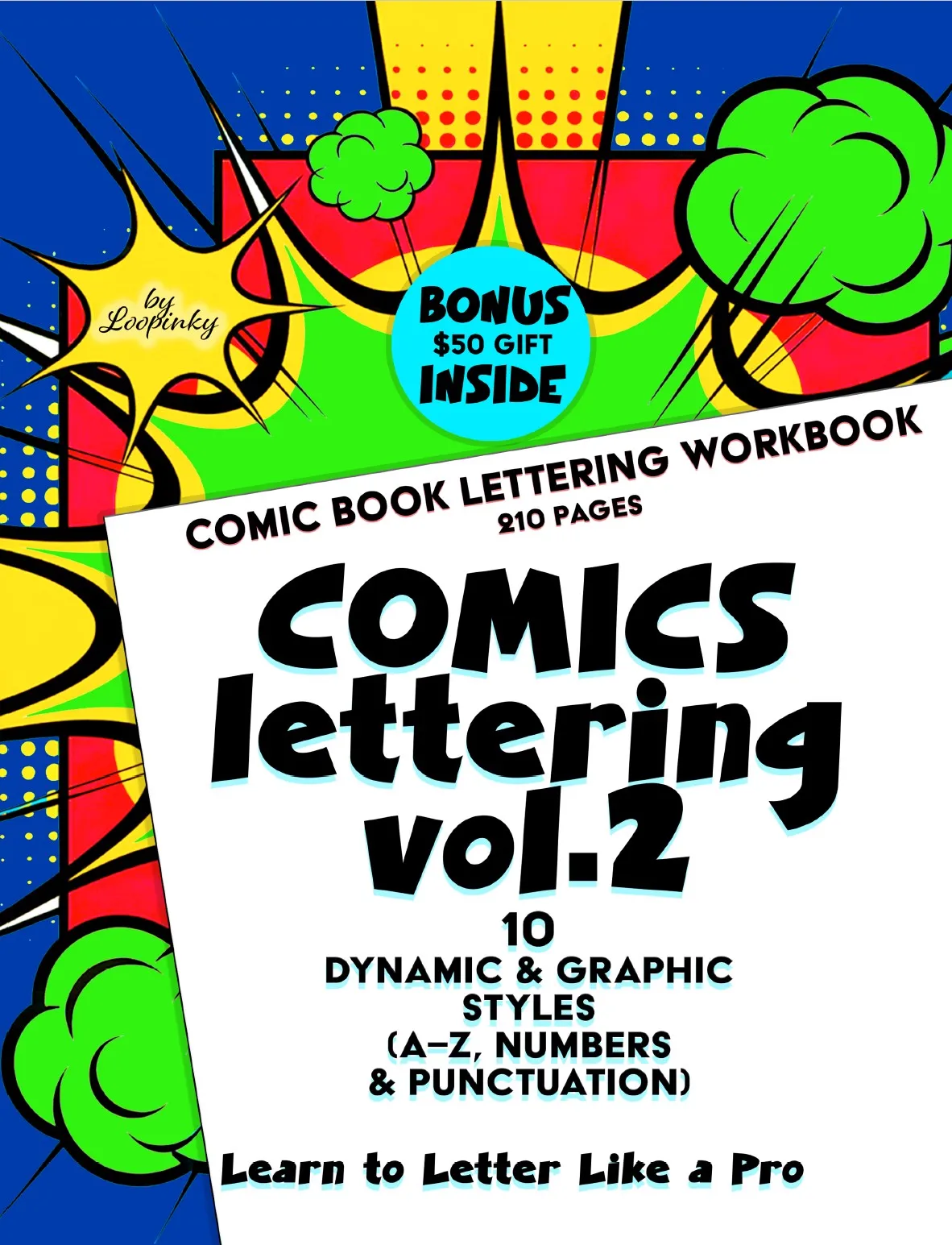
Comics Lettering Vol.2
10 additional dynamic styles with bonus content worth $50. Complete A-Z alphabets, numbers and punctuation. 210 pages.
Buy on Amazon - $14.99Tips for Better Comics Lettering
- Consistency is king: keep the same stroke width, letter height, and spacing throughout a word. Guidelines help enormously.
- Practice full alphabets: don't just practice your name or favorite words. Write the complete A-Z to build familiarity with every letter shape in a given style.
- Study existing comics: look at the lettering in your favorite comics. Notice how different emotions use different styles. Analyze the letter shapes, spacing, and effects.
- Start with tracing: trace existing examples to train your hand before creating letters from scratch. Muscle memory develops faster when you have a guide.
- Use reference sheets: keep an alphabet reference visible while practicing. As you internalize each style, you'll need the reference less.
- Try different tools: the same lettering style looks different with a fine pen versus a thick marker. Experiment to find your preferred tools for each style.
From Practice to Projects
Once you've mastered the basics, apply your skills to real projects:
- Social media graphics: eye-catching titles and quotes for Instagram, TikTok and Pinterest
- Custom stickers: personalized lettering designs for laptops, water bottles, and journals
- Poster design: event posters, room decor, and art prints
- Card making: birthday cards, invitations, and greeting cards with a personal touch
- Comics creation: create your own comic strips or graphic novel pages
Comics lettering is where art meets communication. Every letter you draw has personality, emotion, and energy. The more styles you master, the larger your creative vocabulary becomes.
Ready to start? Browse the Loopinky Comics Lettering collection and begin your journey into bold, expressive hand lettering.