Cursive handwriting is making a comeback, and for good reason. After years of being sidelined in many school curricula in favor of keyboard skills, educators and parents alike are rediscovering what generations before us knew instinctively: learning to write in connected, flowing script does something powerful for a child's developing brain. But here is the challenge many parents face — how do you make cursive practice genuinely fun for kids who would rather be playing or watching a screen?
Why Cursive Still Matters in a Digital World
The debate over whether children should still learn cursive has largely been settled by neuroscience. Studies from Indiana University and the University of Washington have shown that handwriting, and cursive in particular, activates brain regions associated with reading, memory, and creative thinking in ways that typing simply does not replicate.
When a child writes in cursive, the brain must plan each letter's shape, coordinate fine motor movements, and maintain a continuous flow across the page. This combination of tasks strengthens neural pathways that support learning in many other areas. Here are some of the most well-documented benefits:
- Improved fine motor skills: the continuous flowing motion of cursive develops hand muscles and coordination more effectively than print writing
- Better memory retention: children who take notes in cursive remember information more accurately than those who type or print
- Enhanced reading ability: learning to form cursive letters helps children recognize them when reading, improving fluency
- Greater focus and patience: the deliberate, connected nature of cursive requires sustained attention, building concentration skills
- Stronger self-expression: cursive develops into a personal handwriting style that becomes a form of creative identity
Beyond cognitive benefits, there is a practical argument too. Children who can write in cursive can read historical documents, family letters, and a vast body of literature written in longhand. It connects them to the past in a tangible way.
The Problem with Traditional Cursive Worksheets
Most parents who try to teach their children cursive at home quickly run into the same obstacle: boredom. Standard cursive worksheets feature rows of identical letters on lined paper. Write the letter A twenty times. Now write B twenty times. Now write C. For an adult who understands the end goal, this repetition makes sense. For a seven-year-old, it feels like punishment.
The result is predictable. The child rushes through the pages without focusing on letter formation. They associate cursive with tedium. Practice sessions become battles of will between parent and child. And eventually, the workbook gets shoved into a drawer, half finished.
This is not a failure of the child. It is a failure of the material. Children learn best when they are engaged, when practice feels like play, and when the content sparks their imagination. The question is not whether kids should practice cursive, but how to make the practice compelling enough that they actually want to do it.
Themed Workbooks: Where Practice Meets Play
The solution is surprisingly simple: give the practice a theme that children find exciting. Instead of tracing generic letters on blank lines, let them trace letters that belong to a world they want to explore. A Wild West adventure. An ocean voyage. A comic book universe. When the workbook itself tells a visual story, cursive practice transforms from a chore into an experience.
This approach works because it taps into intrinsic motivation. The child is not practicing cursive because a parent told them to. They are practicing because they want to write like a cowgirl, or because the ocean-themed letters look cool and they want to master them. The motivation comes from within, and that makes all the difference in sustained practice.
Loopinky Western Cowgirl: Cursive with Frontier Spirit
Loopinky's Cowgirl workbook introduces five distinct Western-inspired cursive styles, each with a personality that appeals to children who love adventure stories, horses, and the romance of the open range. The letters are designed with elegant curves and decorative touches that make them feel special, not like schoolwork.
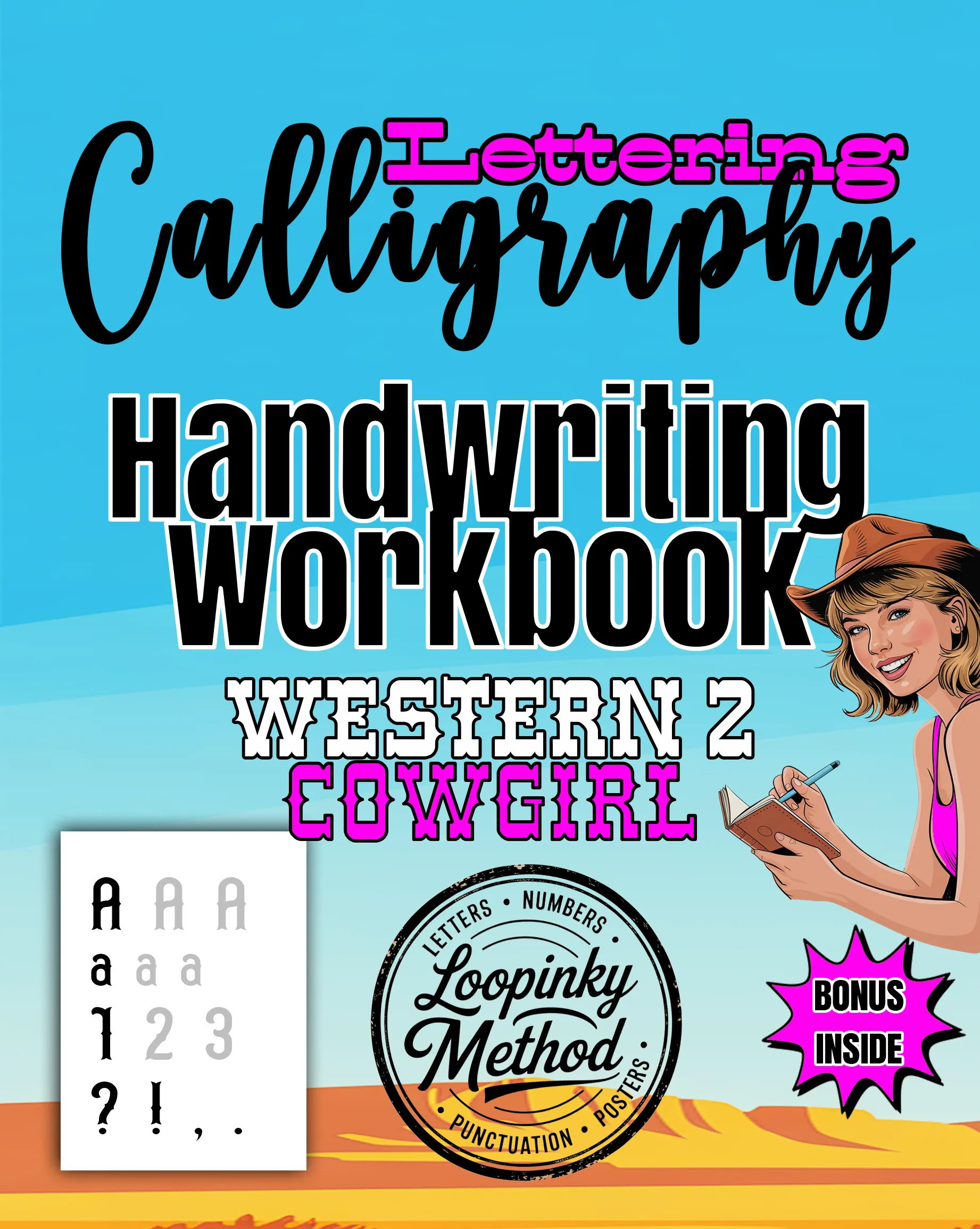
Cursive: Western Cowgirl
5 elegant Western lettering styles, full alphabets, numbers & punctuation.
Buy on Amazon - $9.99Each style progresses from individual strokes to full letters to words and phrases. Children can see their improvement page by page, which builds confidence and keeps them coming back for more. The Western theme gives parents a natural conversation starter too — talk about frontier life, cowgirls in history, or plan a themed art session around the workbook.
Loopinky Western Cowboy: Bold Letters for Adventurous Writers
The companion Cowboy workbook takes a bolder approach with five styles rooted in classic Western typography. For children who prefer strong, confident letterforms over delicate curves, this workbook channels the energy of rodeos, ranches, and wide-open plains into every stroke. The 108-page format provides plenty of practice space without overwhelming young writers.
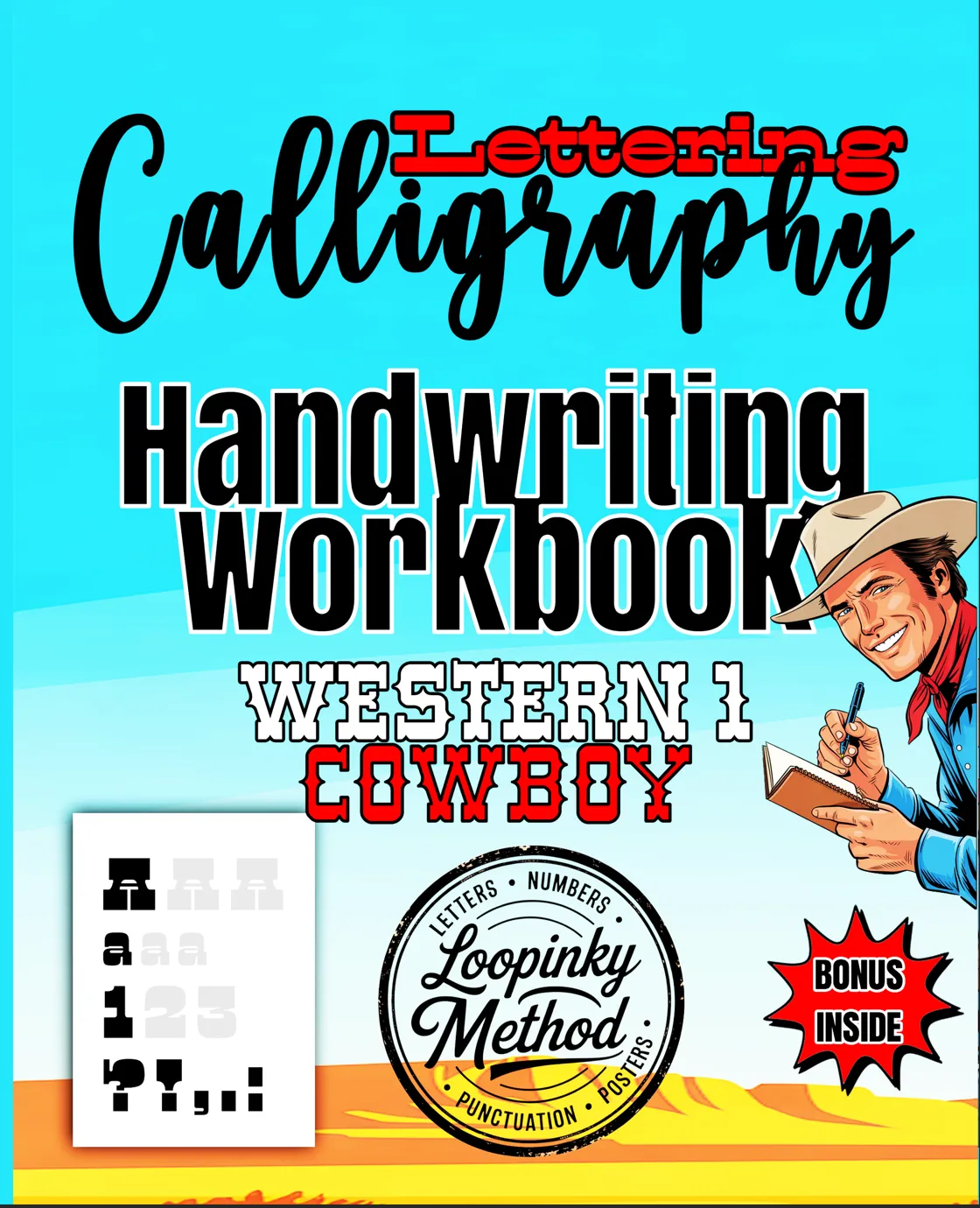
Cursive: Western Cowboy
5 bold Western lettering styles. Full alphabets, numbers & punctuation. 108 pages.
Buy on Amazon - $9.99Having both Cowgirl and Cowboy versions means siblings can each choose the style that resonates with them, or a single child can switch between the two for variety. The shared Western theme makes them perfect for side-by-side practice sessions.
Loopinky Drift: Ocean-Inspired Cursive
For children drawn to the sea, Loopinky's Drift workbook offers five ocean-inspired lettering styles that feel like waves rolling across the page. The fluid, rhythmic nature of these scripts naturally encourages the smooth, connected hand movement that is essential to good cursive writing. It is an excellent choice for kids who find the flowing quality of cursive appealing once it is connected to something they can visualize.
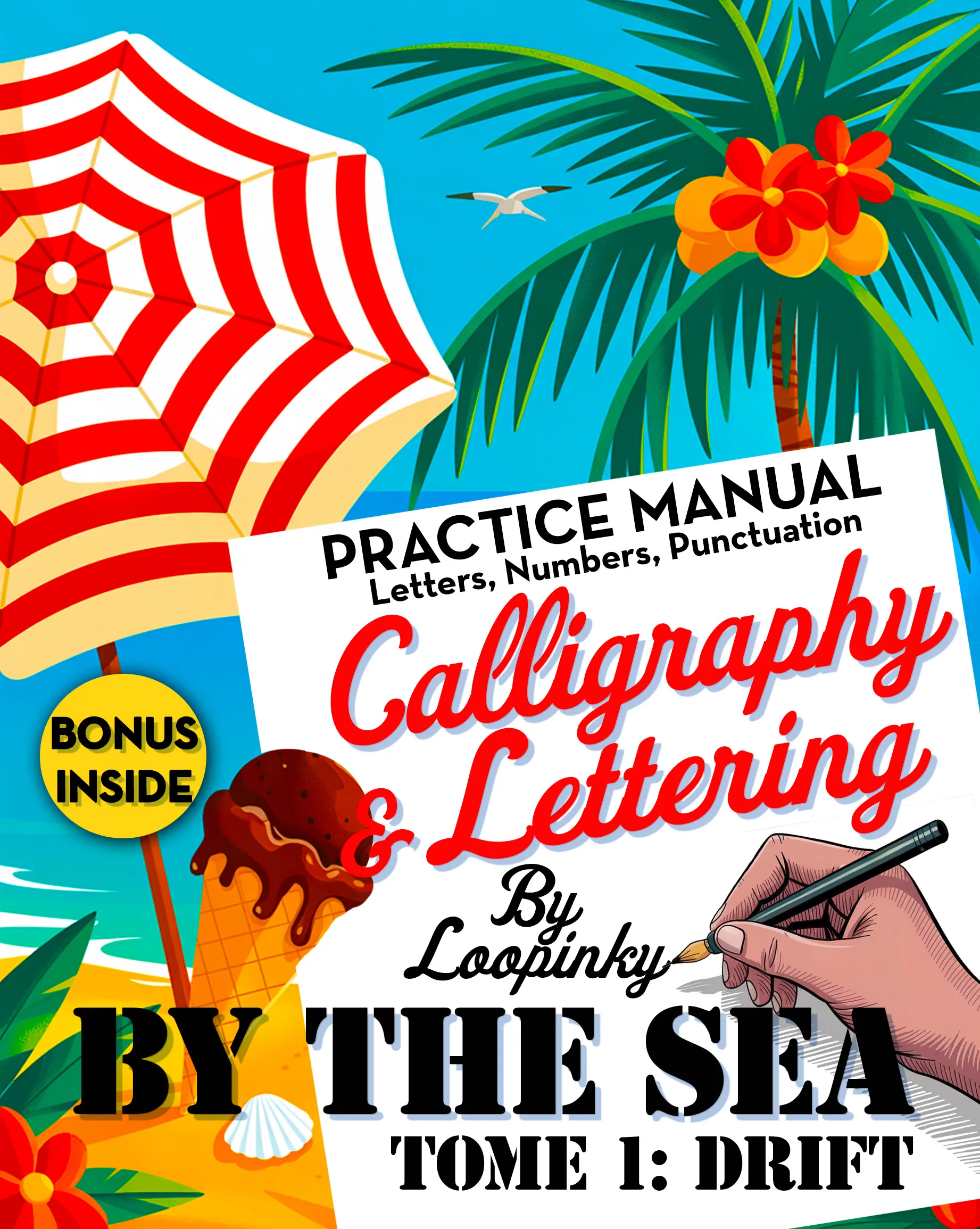
Calligraphy & Lettering: Drift
5 unique ocean-inspired lettering styles. Full alphabets, numbers & punctuation.
Buy on Amazon - $9.99Tips for Parents: Making Cursive Practice Stick
Even with the best workbook, how you introduce and maintain cursive practice at home makes a big difference. Here are proven strategies that work:
- Keep sessions short: 10 to 15 minutes is plenty for younger children. Quality of focus matters more than quantity of pages
- Make it a ritual, not a task: pair cursive practice with something enjoyable like a special snack, background music, or a cozy spot at the kitchen table
- Celebrate progress, not perfection: compare today's letters to last week's, not to a printed standard. Children need to see their own improvement
- Practice together: sit down and work on your own lettering alongside your child. It normalizes the activity and removes the power dynamic
- Give it purpose: have your child write a birthday card, a grocery list, or a note to a grandparent in cursive. Real-world application makes the skill feel meaningful
- Rotate themes: if your child has finished the Cowgirl workbook, switch to Drift. New themes renew excitement and prevent burnout
The goal is not to produce perfect cursive on day one. The goal is to build a child who enjoys the act of writing, who sees a blank page as an invitation rather than an obligation.
What Age Should Kids Start Cursive?
Most handwriting experts recommend introducing cursive between ages seven and nine, once a child has mastered basic print letters and has developed sufficient fine motor control. However, some children are ready earlier, and others benefit from waiting a bit longer. Watch for these signs of readiness:
- Comfortable holding a pencil with a proper grip
- Can write all print letters from memory
- Shows interest in connecting letters or writing in a flowing style
- Has the patience for a 10-minute focused activity
If your child is not quite there yet, themed workbooks can still serve as tracing practice to build the motor skills they will need for cursive later. The visual appeal of the themes keeps them engaged even at the tracing stage.
Beyond the Workbook: Creative Cursive Activities
To reinforce what your child learns in their workbook, try these fun activities that use cursive in everyday life:
- Cursive scavenger hunt: find words in cursive on restaurant menus, certificates, or old letters
- Pen pal project: exchange handwritten letters with a cousin, friend, or grandparent
- Journal time: encourage your child to keep a short daily journal in cursive, even just one sentence
- Art integration: combine cursive lettering with drawing by creating illustrated quotes or story titles
Cursive handwriting is one of those rare skills that benefits both the brain and the soul. With the right tools and a little creativity, practice does not have to feel like work. Explore the full Loopinky collection and find a workbook that turns your child's cursive journey into an adventure.