Chinese calligraphy is one of the oldest and most refined art forms in the world. For over three thousand years, the practice of writing Chinese characters with a brush has been elevated far beyond simple communication. It is considered a path to self-cultivation, a form of meditation, and one of the highest expressions of personal artistry in East Asian culture. For anyone who practices lettering or calligraphy in any alphabet, understanding Chinese brush writing reveals universal truths about the relationship between the hand, the tool, and the mark on the page.
A Living Tradition Spanning Millennia
The earliest Chinese characters were carved into oracle bones during the Shang Dynasty, around 1200 BCE. As writing materials evolved from bone and bronze to bamboo, silk, and eventually paper, the tools and techniques of calligraphy evolved with them. The invention of the writing brush, made from animal hair bound to a bamboo handle, transformed Chinese writing from a craft of carving into a fluid art of painting.
Throughout Chinese history, calligraphy held a unique cultural position. It was one of the Six Classical Arts that every educated person was expected to master. Emperors collected and promoted the works of great calligraphers. Scholar-officials were judged as much by the quality of their handwriting as by the content of their words. This reverence for beautiful writing created an unbroken tradition of practice and innovation that continues to this day.
The influence of Chinese calligraphy extends far beyond China itself. Japanese calligraphy (shodo), Korean calligraphy (seoye), and Vietnamese calligraphy all grew from Chinese roots, each developing distinctive characteristics while maintaining the core principles of brush technique and aesthetic balance.
The Four Treasures of the Study
Chinese calligraphy revolves around four essential tools, traditionally known as the Four Treasures of the Study (Wenfang Sibao). Each plays a critical role in the quality of the finished work.
The Brush (Bi): Chinese calligraphy brushes are made from animal hair, most commonly goat, wolf, or rabbit, set into a bamboo or wooden handle. The type of hair determines the brush's character. Soft goat hair produces thick, absorbent strokes ideal for flowing scripts. Stiff wolf hair creates sharp, precise lines suited to angular styles. Mixed-hair brushes offer a balance of flexibility and control. A skilled calligrapher owns multiple brushes and selects the right one for each script and mood.
The Ink (Mo): Traditional Chinese ink comes in solid stick form, made from pine soot or lampblack bound with animal glue. The calligrapher grinds the ink stick on a wet inkstone before each session, a ritual that serves as both preparation and meditation. The grinding process allows the calligrapher to control the ink's density, from a deep, glossy black to a pale, watery grey. This range of tones is essential to expressive brush writing.
The Paper (Zhi): Xuan paper, made from the bark of the blue sandalwood tree, is the traditional choice for Chinese calligraphy. Its absorbent surface captures the brush's movement with extraordinary sensitivity, recording every variation in pressure, speed, and moisture. This responsiveness makes Xuan paper both demanding and rewarding. There is no erasing or correcting. Every stroke is permanent and honest.
The Inkstone (Yan): The inkstone provides the surface on which the ink stick is ground. Fine inkstones, carved from specific types of stone found in particular regions of China, are prized as art objects in their own right. The texture of the stone affects how smoothly the ink is ground and how evenly it flows from the brush.
The Five Major Script Styles
Seal Script (Zhuanshu)
Seal Script is the oldest surviving Chinese script style, originating during the Zhou Dynasty and standardized under the Qin Dynasty around 220 BCE. Its characters are symmetrical, rounded, and evenly weighted, with uniform stroke thickness throughout. The name comes from its continued use in carved seals and stamps, which remain an important tradition in East Asian culture. Seal Script is rarely used for everyday writing today, but studying it provides a deep understanding of how Chinese characters evolved and how their internal logic works.
Clerical Script (Lishu)
Clerical Script emerged during the Han Dynasty as a more practical, faster alternative to Seal Script. It introduced the horizontal emphasis that characterizes most later Chinese scripts, with pronounced thick-thin variation in the strokes. The distinctive "silkworm head, goose tail" stroke, which begins with a rounded press and ends with a sweeping flick, is one of the most recognizable features of Clerical Script. This style marked the transition from the ancient round scripts to the angular, structured forms that followed.
Regular Script (Kaishu)
Regular Script is the standard script of Chinese calligraphy, equivalent in status to the printed alphabet in Western typography. Developed during the late Han Dynasty and perfected in the Tang Dynasty, Regular Script balances clarity with beauty. Each stroke is distinct, each character occupies a consistent square space, and the rules of proportion and structure are clearly defined. For beginners, Regular Script is the essential starting point. Masters like Yan Zhenqing and Liu Gongquan established models of Regular Script that calligraphers still study and emulate today.
Running Script (Xingshu)
Running Script is the semi-cursive style that bridges the gap between the formal precision of Regular Script and the expressive freedom of Cursive Script. Strokes that would be separate in Regular Script are connected with fluid linking movements, and some simplification of complex characters is allowed. Running Script is the most commonly used style for personal handwriting in Chinese culture because it balances speed with readability. Wang Xizhi's "Preface to the Orchid Pavilion," written in Running Script in 353 CE, is widely considered the greatest work of Chinese calligraphy ever produced.
Cursive Script (Caoshu)
Cursive Script is the most expressive and abstract of the five major styles. Characters are radically simplified, strokes merge and flow into one another, and the brush rarely lifts from the paper. To the untrained eye, Cursive Script can appear almost illegible, but to a practiced calligrapher, it represents the ultimate freedom of expression. The speed and energy of Cursive Script capture the calligrapher's emotional state in real time, making each piece a unique record of a moment of creative intensity.
The Meditative Quality of Chinese Brush Writing
Chinese calligraphy has long been recognized as a form of moving meditation. The preparation ritual of grinding ink, the controlled breathing that accompanies each stroke, the absolute focus required to guide the brush through a complex character: all of these elements create a practice that quiets the mind and anchors attention in the present moment.
This meditative quality is something that Chinese calligraphy shares with all forms of careful lettering. At Loopinky, our workbooks are designed around the same principle: that the slow, deliberate act of forming beautiful letters is inherently calming and rewarding. While our focus is on Latin alphabet scripts, the experience of flow and mindfulness is universal across calligraphic traditions.
Bring Meditative Lettering Into Your Practice
Loopinky's Beach Premium workbook captures the contemplative spirit of brush calligraphy in a Latin script format. The 210-page premium manual emphasizes fluid, continuous strokes and rhythmic practice that echo the principles of Chinese brush writing.
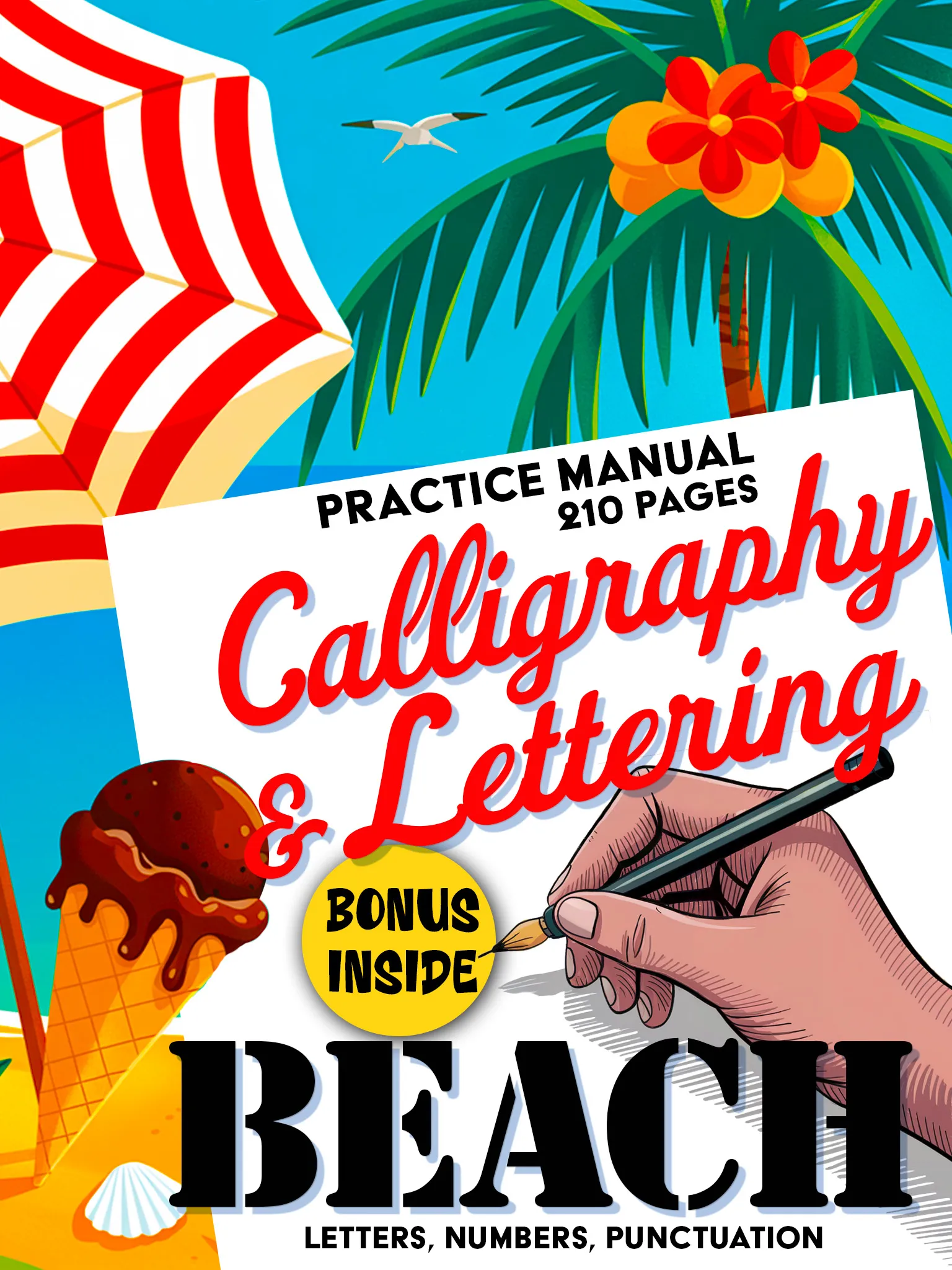
Calligraphy & Lettering: Beach Premium
Premium 210-page calligraphy manual. Fluid scripts, decorative elements and creative layouts.
Buy on Amazon - $14.99For variety and exploration, the Drift workbook offers five distinct lettering styles in a single volume, allowing you to experience different rhythms and moods within your practice.
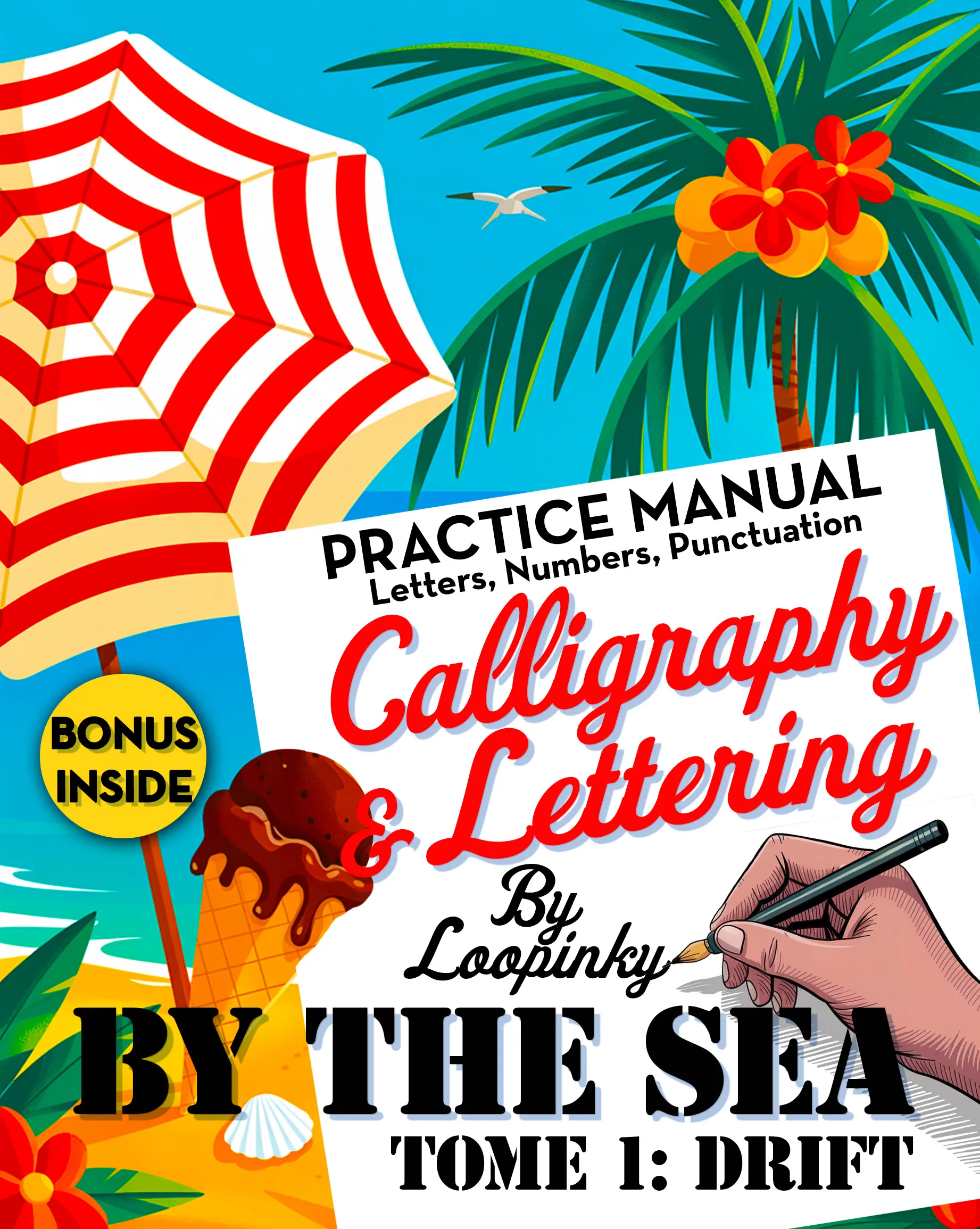
Calligraphy & Lettering: Drift
5 unique ocean-inspired lettering styles. Full alphabets, numbers & punctuation.
Buy on Amazon - $9.99Chinese calligraphy teaches us that every stroke matters, that beauty emerges from discipline, and that the act of writing can be as meaningful as the words themselves. Whether you explore East Asian brush writing or Latin lettering, the path to mastery is the same: practice with patience, write with intention, and let the art transform both the page and the person holding the pen.