Choosing the right brush pen can make or break your calligraphy and hand lettering experience. The perfect pen feels like an extension of your hand, responding to every subtle change in pressure with smooth, consistent ink flow. The wrong pen fights you at every stroke, skips, bleeds, or produces lines that look nothing like what you intended.
With dozens of brush pens on the market, finding the right one for your skill level and lettering style can feel overwhelming. We've tested the most popular brush pens available in 2026 and put together this comprehensive guide to help you find your perfect match -- whether you're just starting out or you're an experienced letterer looking for the best tools for specific techniques.
What Makes a Great Brush Pen?
Before diving into specific recommendations, let's understand what separates a great brush pen from an average one:
- Tip flexibility: the tip should respond to pressure changes predictably. Light pressure for thin upstrokes, heavier pressure for thick downstrokes. The transition between thin and thick should be smooth, not abrupt.
- Ink flow consistency: the pen should deliver a steady, even flow of ink without skipping, pooling, or flooding. Nothing disrupts your flow state like a pen that stops writing mid-stroke.
- Tip durability: brush tips wear out over time, but a quality pen maintains its shape for thousands of strokes. Cheap tips fray quickly, making precise lettering impossible.
- Ink quality: rich, vibrant color that doesn't feather or bleed through paper. Archival-quality ink is important if your work needs to last.
- Comfort: the pen should be comfortable to hold for extended practice sessions. Weight, grip texture, and barrel diameter all matter.
The Best Brush Pens Reviewed
1. Tombow Fudenosuke -- Best for Beginners
The Tombow Fudenosuke is the brush pen we recommend to every beginner, and it remains one of the most popular calligraphy pens in the world for good reason. It comes in two versions: hard tip and soft tip.
The hard tip version is ideal for beginners because it requires more pressure to create thick strokes, which gives you more control while you're developing your pressure sensitivity. It produces small, precise lettering -- perfect for practice workbooks, envelopes, and detail work.
The soft tip version is slightly more flexible, creating a wider range of line variation with less effort. It's the natural step up once you're comfortable with the hard tip.
- Best for: beginners, small-scale lettering, practice workbooks, envelope addressing
- Tip type: firm elastomer (hard) / flexible elastomer (soft)
- Line variation: moderate (hard tip) to good (soft tip)
- Price: approximately $3-4 per pen
- Workbook compatibility: excellent with all Loopinky calligraphy workbooks, especially Beach Premium and Drift
2. Pentel Sign Pen Brush Tip -- Best Value
The Pentel Sign Pen with brush tip is a hidden gem that many professional letterers swear by. It offers a flexible felt brush tip that produces beautiful thick-thin contrast at an incredibly affordable price point.
What makes the Pentel Sign Pen special is its responsiveness. The tip bounces back to its original shape reliably, maintaining consistent performance throughout the life of the pen. It's also available in a wide range of colors, making it versatile for both practice and finished work.
- Best for: daily practice, colored lettering, bullet journaling, affordable large-quantity purchases
- Tip type: flexible felt brush
- Line variation: good to excellent
- Price: approximately $2-3 per pen
- Workbook compatibility: great with all Loopinky workbooks
3. Tombow Dual Brush Pen -- Best for Color Work
The Tombow Dual Brush Pen is the industry standard for color brush lettering. With 108 colors available and a flexible nylon brush tip on one end and a fine tip on the other, it's the most versatile brush pen on the market.
The brush tip is larger and more flexible than the Fudenosuke, producing bold, dramatic lettering at larger scales. The ink is water-based and blendable, allowing for beautiful gradient and watercolor effects. The fine tip end is perfect for detail work and adding small text.
One important note: the Dual Brush Pen's large, flexible tip can be challenging for absolute beginners. We recommend starting with the Fudenosuke and graduating to the Dual Brush once you have basic pressure control.
- Best for: color work, large-scale lettering, blending techniques, art projects, intermediate to advanced letterers
- Tip type: flexible nylon brush + fine tip
- Line variation: excellent (very thin to very thick)
- Price: approximately $3-4 per pen
- Workbook compatibility: works well with Loopinky Comics Lettering for bold, expressive styles
4. Sakura Pigma Brush -- Best for Archival Work
The Sakura Pigma Brush uses archival-quality pigment ink that is waterproof, fade-resistant, and chemically stable. If you need your lettering to last decades without fading, this is your pen.
The brush tip is moderately flexible -- less so than the Tombow Dual but more than the Fudenosuke hard tip. It produces clean, consistent lines with rich black ink. The pigment-based formula means it won't feather on most papers, making it reliable across different paper types.
- Best for: archival work, mixed media art, scrapbooking, any project requiring permanent ink
- Tip type: moderate flexibility brush
- Line variation: moderate to good
- Price: approximately $4-5 per pen
- Workbook compatibility: excellent with all Loopinky workbooks (archival ink won't bleed through quality paper)
5. Kuretake ZIG Clean Color Real Brush -- Best Professional Brush Pen
The Kuretake ZIG Clean Color Real Brush is a favorite among professional calligraphers and letterers. Unlike the felt or elastomer tips found on other pens, this pen features real brush fibers that mimic the behavior of a traditional paintbrush.
The result is unparalleled expressiveness and line variation. You can go from hairline thin to dramatically thick with the slightest change in pressure and angle. The water-based ink is blendable with water, allowing for watercolor-like effects.
However, this pen has the steepest learning curve. The real brush tip requires more control than felt or elastomer tips, and beginners may find it frustrating initially. It's best suited for letterers who already have solid fundamentals.
- Best for: professional calligraphers, advanced letterers, watercolor lettering, art pieces
- Tip type: real brush fibers
- Line variation: exceptional
- Price: approximately $3-4 per pen
- Workbook compatibility: best with Beach Premium Calligraphy for elegant script styles
Which Brush Pen Should You Buy?
Here's our quick recommendation based on your experience level:
- Complete beginner: start with the Tombow Fudenosuke Hard Tip. It's forgiving, affordable, and perfect for learning pressure control with a practice workbook.
- Beginner ready to explore: add the Pentel Sign Pen Brush for variety. Having two different tip feels accelerates your learning.
- Intermediate letterer: graduate to the Tombow Dual Brush Pen for color work and larger lettering. Keep your Fudenosuke for small-scale work.
- Advanced letterer: invest in the Kuretake ZIG Real Brush for maximum expressiveness. Add the Sakura Pigma Brush for archival projects.
- Gift buyer: the Tombow Dual Brush Pen 10-pack is the most popular calligraphy gift. Pair it with a Loopinky workbook for a complete starter kit.
Paper Matters: The Best Paper for Brush Pens
Even the best brush pen will underperform on the wrong paper. Here's what to look for:
- Smooth surface: rough or textured paper catches brush fibers and causes fraying. Look for "extra smooth" or "marker-friendly" paper.
- Adequate weight: lightweight paper (below 80 gsm) allows ink to bleed through. For brush pens, use paper that's at least 90 gsm, ideally 120 gsm or more.
- Practice workbooks: high-quality workbooks like the Loopinky series are printed on paper specifically chosen to work well with brush pens -- smooth enough to protect tips but with enough tooth to maintain control.
How to Make Your Brush Pens Last Longer
- Cap them immediately after use: even 30 seconds uncapped can start drying out the tip.
- Store horizontally: this keeps ink distributed evenly throughout the pen.
- Use light pressure for upstrokes: excessive pressure on upstrokes is the number one cause of tip damage. Let the pen glide upward with minimal pressure.
- Clean tips regularly: if you use multiple colors, clean brush tips on scrap paper between uses to prevent color contamination.
- Practice on smooth paper: rough paper frays brush tips dramatically faster. Always use pen-friendly paper for practice.
Pair Your Brush Pens with the Right Workbook
Having a great brush pen is only half the equation. A structured practice workbook gives you the guided exercises, progressive skill building, and muscle memory development that transform a beginner into a confident letterer. Here are our recommendations:
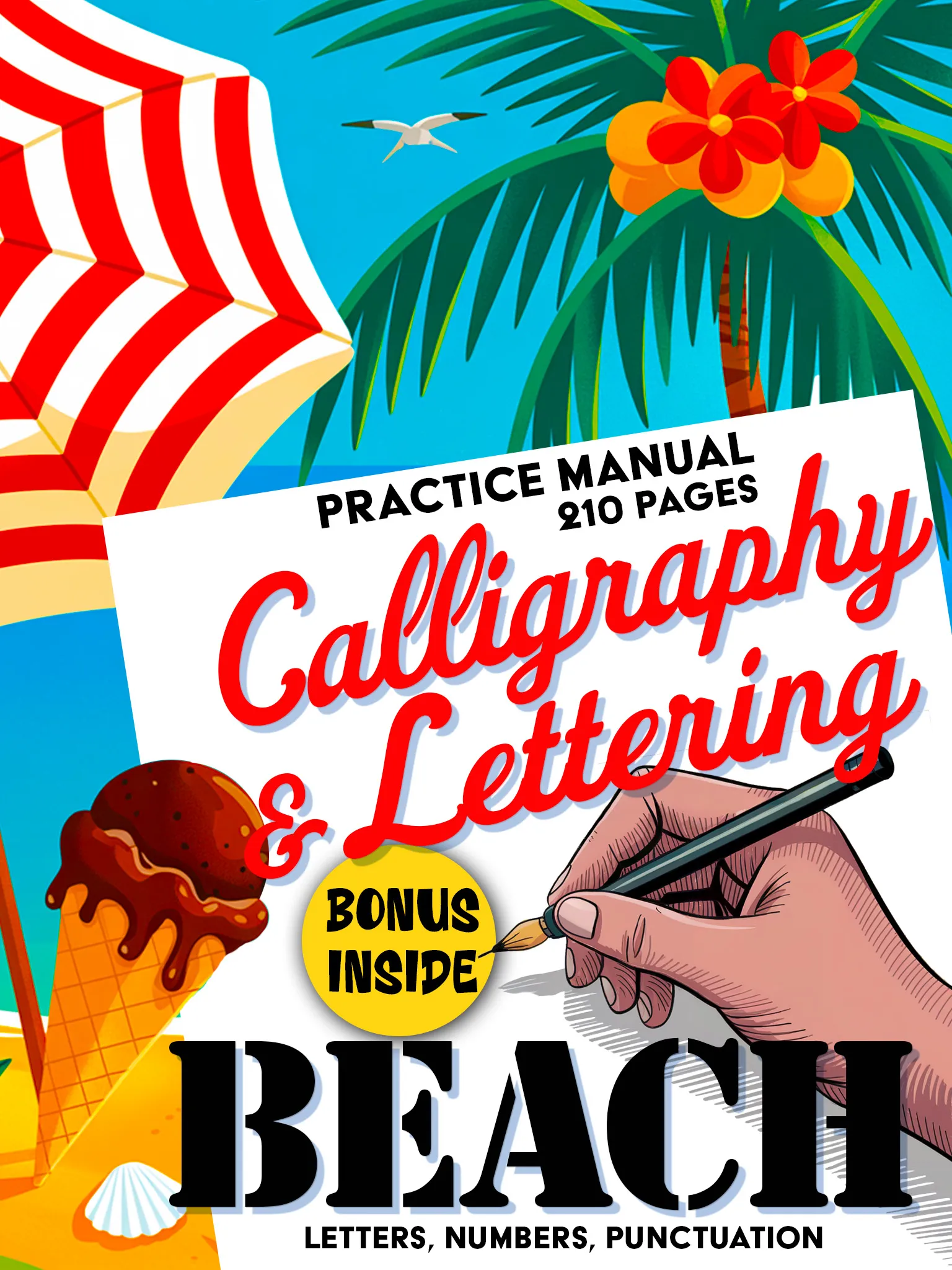
Beach Premium Calligraphy
Elegant calligraphy styles perfect for brush pen practice. Ideal with Tombow Fudenosuke and Kuretake ZIG. 210 pages of guided exercises.
Buy on Amazon - $14.99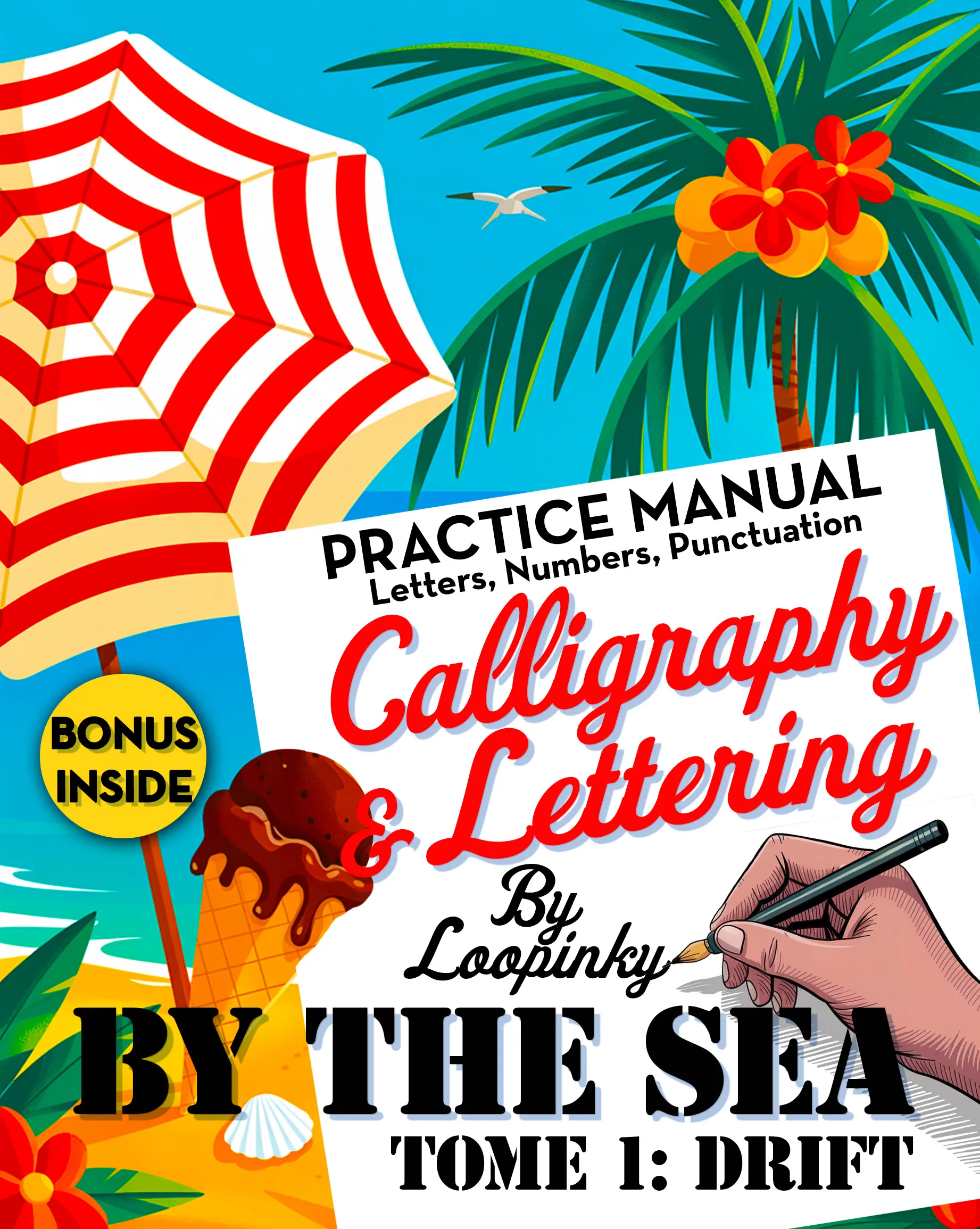
Drift Lettering Workbook
Modern lettering styles designed for brush pen practice. Works beautifully with the Pentel Sign Pen and Tombow Fudenosuke.
Buy on Amazon - $9.99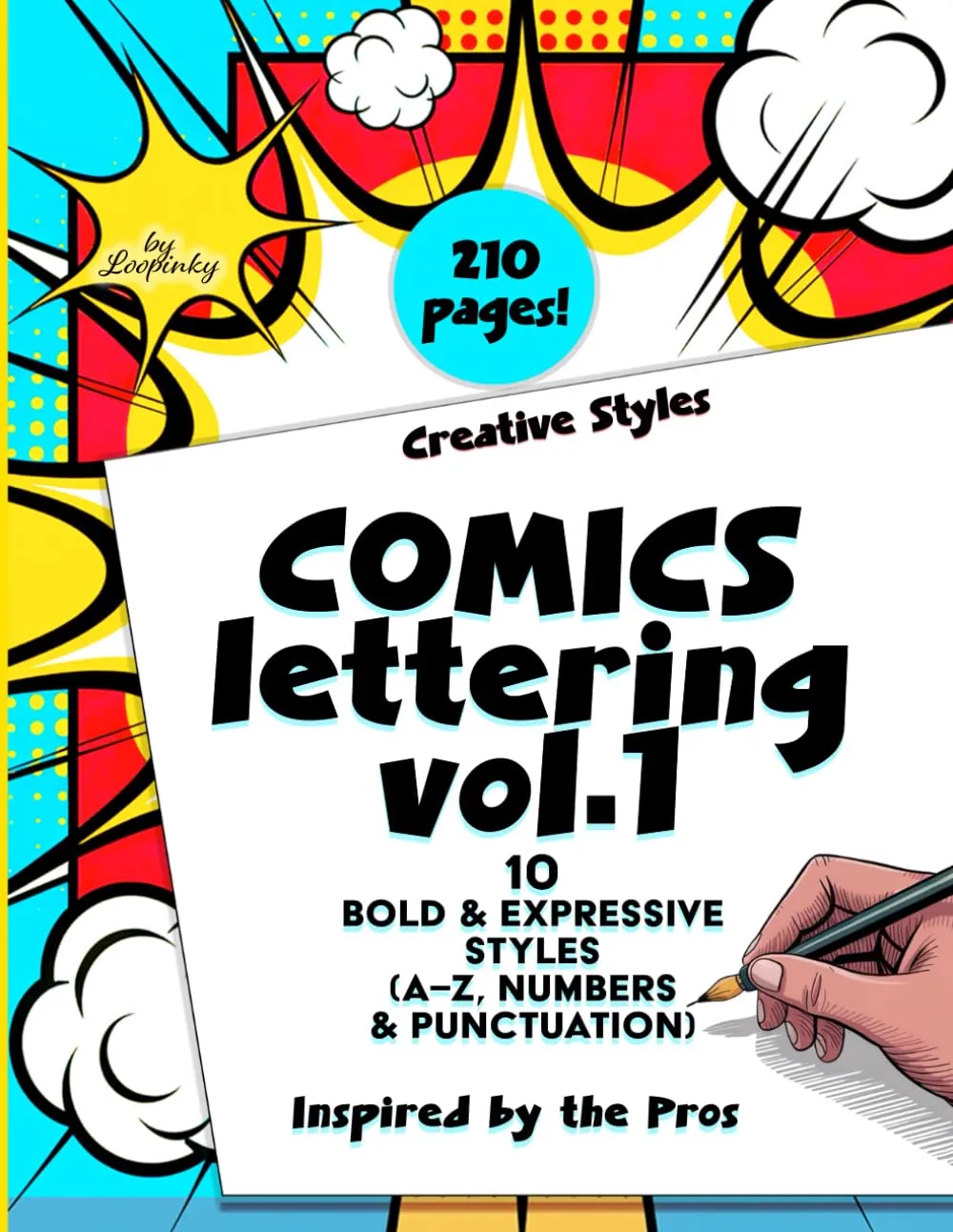
Comics Lettering Vol.1
Bold, expressive lettering styles that pair perfectly with Tombow Dual Brush Pens. 10 complete alphabets across 210 pages.
Buy on Amazon - $14.99The best brush pen is the one that makes you want to practice every day. Find the pen that feels right in your hand, pair it with a great workbook, and watch your lettering transform.
Ready to start your brush pen calligraphy journey? Explore the complete Loopinky workbook collection and find the perfect companion for your favorite brush pens.